
.png)
From the Thai Gem and Jewelry Traders Association (TGJTA)
We wish to highlight a topic currently sparking significant interest and debate within the global jewelry industry: "Memorial/Cremation Diamonds"—the claim that diamonds can be created from the carbon remaining in the ashes of the deceased.
Based on investigations by Global Claims Associates (initiated by leading global insurance companies over 20 years ago) and a compilation of scientific data from international sources, we have discovered "4 Concerning Facts" that consumers should carefully consider before investing a substantial amount of money.
Investigations reveal that many major manufacturers of cremation diamonds frequently use public relations imagery that does not reflect reality.
The Presented Image: Companies often claim to use massive "Diamond Making Presses."
The Reality: The images shown are often merely "Pellet Presses" used for preparing laboratory samples, which are incapable of producing diamonds. Real HPHT (High Pressure High Temperature) diamond manufacturing systems are highly complex and look completely different from the simplistic machinery often advertised.
The core of diamond production is the element "Carbon" (C). However, scientific studies reveal facts that directly contradict marketing claims:
Combustion Temperature: Carbon begins to burn at approximately 300°F (149°C) and is completely incinerated by 1,400°F (760°C).
Actual Cremation Temperature: Crematories typically operate between 1,400°F and 1,800°F (760°C - 982°C). This temperature is high enough to ensure that all carbon in the body is oxidized into Carbon Dioxide ($CO_2$) gas and evaporates completely.
University of Montana Research: Studies on the chemical composition of cremated remains found that at just 600°C (1,112°F), all carbon had already disappeared, leaving only calcined bone (bone completely processed by fire).
Additional Data from International Sources:
This aligns with information from The Cremation Association of North America (CANA), which states that modern cremation processes use such high heat that the remaining material is "Bone fragments," consisting primarily of Calcium Phosphate, not carbon.
Reference: Cremation Association of North America - The Cremation Process
The investigative report cites multiple internationally published research papers confirming that carbon is not found in the composition of heat-treated bone or general human bone at levels viable for diamond creation:
Journal of Applied Spectroscopy: No carbon found in bone tissue analysis.
Journal of Radioanalytical and Nuclear Chemistry: Analysis of Cortical and Trabecular bone showed no presence of carbon.
International Atomic Energy Commission (IAEA): Reports on minor and trace elements in bone and teeth do not list carbon among the detected elements.
Strategic Observation:
If ashes contain no carbon, the critical question is: "What is the diamond actually made of?"
Data from Science Notes and chemical experts indicate that these companies often state in the "fine print" that they may need to add an "External Carbon Source" to the process. This implies that the diamond may be created from 100% generic lab carbon, containing no physical components of the deceased. The ashes may simply be added as a "ritual" step but are not part of the diamond’s actual atomic structure.
Reference: Helmenstine, Anne Marie, Ph.D. "Can You Turn Cremated Ashes Into Diamonds?" Science Notes.
Currently, Lab-Grown Diamond (LGD) technology has advanced significantly, causing the price of synthetic diamonds to drop rapidly.
Market Price (2024): A standard 1-carat synthetic diamond can start as low as $159 (approx. 5,500 THB).
Cremation Diamond Price: Companies often set prices as high as $20,000 (approx. 700,000 THB) or more.
This massive price gap demonstrates pricing based on "Emotional Value" rather than the actual cost or value of the product, which can be seen as exploiting consumers during their most vulnerable moments.
As industry experts, we conclude that the claim of extracting carbon from fully cremated ashes to create diamonds contradicts fundamental scientific principles. While Lab-Grown Diamond technology is real, linking the resulting diamond to the physical remains of the deceased is likely a "Marketing Illusion."
Our recommendations for you:
Verify Certificates: If you still wish to proceed, demand a certificate from a neutral gemological institute (such as GIA or IGI). However, be aware that these institutes only certify that it is a "Lab-Grown Diamond/Synthetic Diamond." They cannot verify the source of the carbon or whether it actually came from ashes.
Consider Alternatives: Using that substantial amount of money to donate to charity in the deceased’s name, or purchasing a standard Lab-Grown diamond and performing a religious ceremony to dedicate it to them, may be a more transparent and worthwhile option.
Reason Over Emotion: We understand the depth of your grief, but we urge you to consider the scientific evidence to avoid falling victim to opportunistic commercial practices.
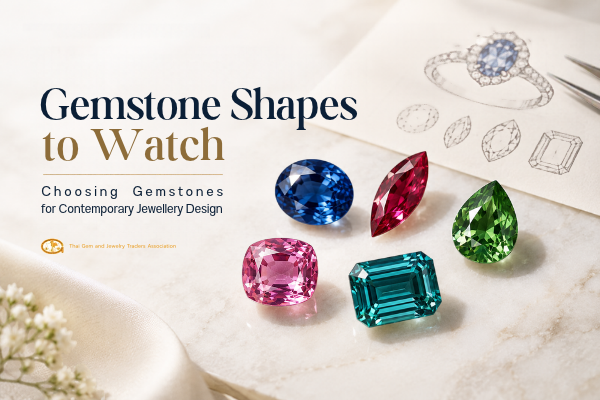
Explore Oval, Marquise, Pear and Cushion gemstone shapes, how to select them for contemporary jewellery design, and how proportions, cutting quality, rarity and market demand influence value.
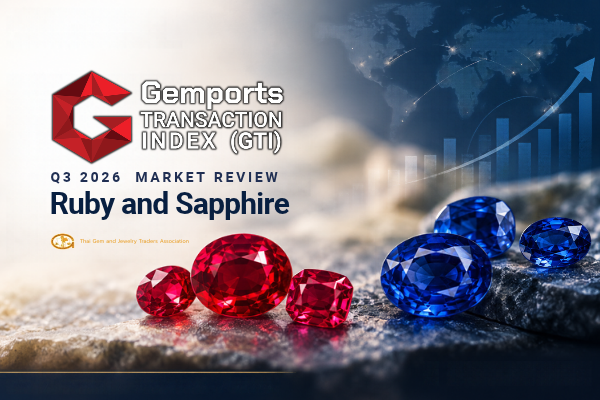
Explore GEMPORTS Q3 2026 market insights on rubies and sapphires, as GTI rises on premium gemstone transactions amid stable prices and constrained supply.
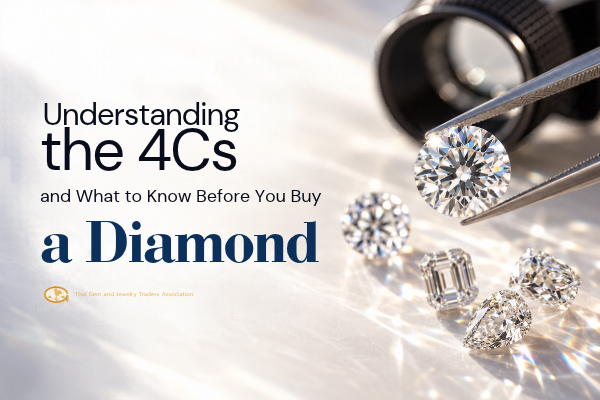
Learn how to choose a diamond with this guide to the 4Cs: Cut, Colour, Clarity and Carat Weight. Understand natural and laboratory-grown diamonds, grading reports and how to make an informed purchase.