
.png)
Thai Gem and Jewelry Traders Association (TGJTA) recognizes that "Lab Grown Diamonds (LGD)" play a significant role in today's market, presenting a new challenge for the industry. The most critical issue is that Lab Grown Diamonds (LGD) possess physical and chemical properties nearly identical to natural diamonds. Consequently, the traditional diamond testers that many entrepreneurs are familiar with can no longer distinguish between the two.
This article provides essential information to help entrepreneurs choose the correct preliminary screening tools to manage business risks, and to help consumers observe the tools used by merchants, increasing confidence before purchasing high-value items.
Traditional diamond testers (which we will classify as Type 1 and Type 2) were designed to measure specific properties solely to distinguish diamonds from Simulants (such as Cubic Zirconia or Glass).
When these machines test a Lab Grown Diamond (LGD), they will always display the result as "Diamond." This is the critical blind spot that creates significant risk and potential financial loss.
Are you using a "Risky" tool?
To help entrepreneurs choose the right equipment, we classify portable diamond testers in the market into 3 main types based on their capabilities and technology:
This is the basic "Pen Tester" model familiar to many.
Technology: Measures Thermal Conductivity only.
Capability: Separates Diamonds from cheap Simulants (CZ, Glass, YAG).
Limitations:
Cannot separate Moissanite: Moissanite conducts heat well, causing the machine to give a "False Positive" (identifying it as a diamond).
Cannot separate Lab Grown Diamonds (LGD): The machine will give an incorrect result.
Association's Advice: This tool is completely insufficient for modern business. It carries a very high risk.
These tools were developed to fix the blind spots of Type 1 and are popular in general jewelry shops.
Technology: Uses both Thermal Conductivity and Electrical Conductivity.
Capability: Separates Diamonds from Simulants (CZ) and, crucially, separates Moissanite (because Moissanite conducts electricity, whereas most diamonds do not).
Critical Limitation:
Still cannot separate Lab Grown Diamonds (LGD): Since both Natural Diamonds and LGDs are generally non-conductive, the machine cannot tell them apart.
These are modern tools designed specifically to handle the screening of Lab Grown Diamonds (LGD).
Technology: Goes beyond heat/electricity to use advanced optical technologies, such as analyzing reactions to Short-wave UV (SWUV), Phosphorescence, or Spectroscopy.
Result:
Displays "Pass" when it detects a Natural Diamond (High accuracy).
Displays "Refer" if the stone requires further testing with other instruments.
Association's Advice: This is a necessary risk management tool in the current era. It acts as an "insurance policy" for your business.
Type 3 machines are Screeners, not Identifiers.
"Pass" (Approved): Means it is a Natural Diamond.
"Refer" (Send for testing): Means the diamond exhibits properties of a Type IIa diamond. It requires further verification in a laboratory.
Caution! A "Refer" result does not necessarily mean "Fake Diamond" or "LGD." It could mean:
It is a Lab Grown Diamond (LGD).
It is a Natural Diamond (Type IIa), which is rare and highly valuable.
As a buyer, you can use this information to buy with confidence:
Observe the tool the shop uses.
Understand the process: If the shop uses a Type 3 machine and the result is "Refer," do not panic.
Interpret correctly: A "Refer" result shows the shop is honest and using the right technology. Their next duty is to send that stone to a laboratory or provide evidence (a Certificate) confirming what the diamond is.
In modern diamond verification, entrepreneurs and consumers must understand where they stand:
1. Verification for Risk Management: Use an LGD Screener (Type 3)
Identifies general Natural Diamonds (Pass) or Suspicious Diamonds (Refer).
Note: If "Refer," it cannot confirm 100% whether it is LGD or Natural Type IIa.
2. Verification for Maximum Certainty: Use a Gemological Laboratory (Lab Report)
Capabilities: Confirms Origin and Quality (4Cs) with 100% certainty.
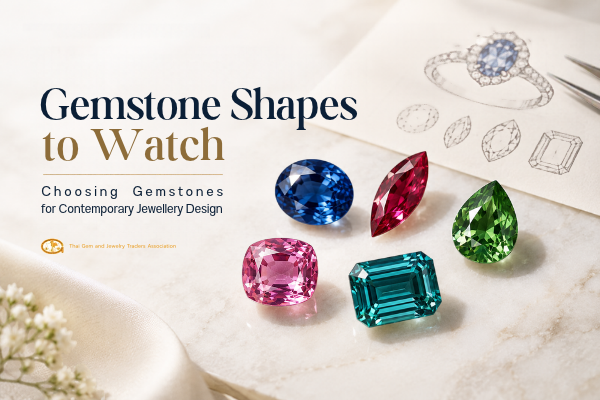
Explore Oval, Marquise, Pear and Cushion gemstone shapes, how to select them for contemporary jewellery design, and how proportions, cutting quality, rarity and market demand influence value.
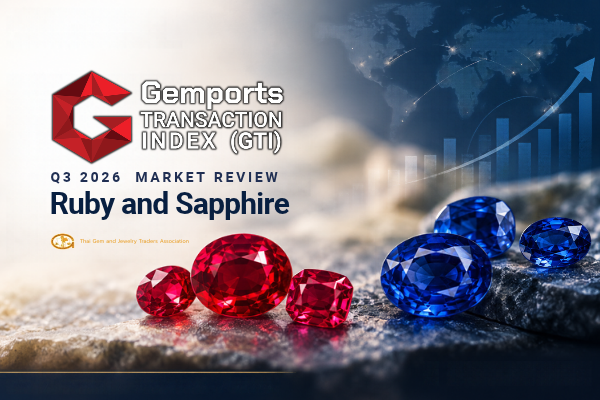
Explore GEMPORTS Q3 2026 market insights on rubies and sapphires, as GTI rises on premium gemstone transactions amid stable prices and constrained supply.
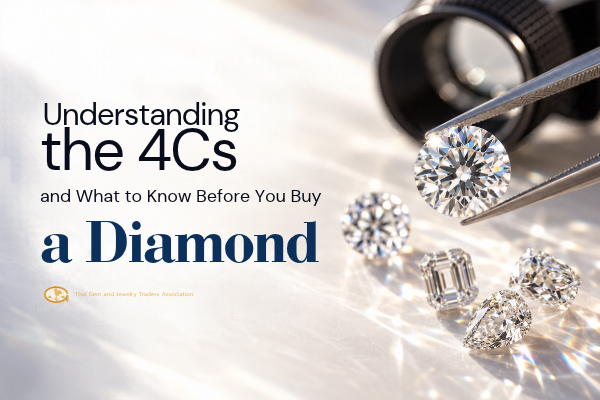
Learn how to choose a diamond with this guide to the 4Cs: Cut, Colour, Clarity and Carat Weight. Understand natural and laboratory-grown diamonds, grading reports and how to make an informed purchase.