
When investing in a diamond, whether for a special occasion or as a long-term asset, the Diamond Certificate (also known as a Grading Report) is the single most important document that guarantees its quality and value. But simply having a certificate isn't enough—you need to know how to verify it.
The Thai Gem and Jewelry Traders Association (TGJTA) presents a definitive, step-by-step guide to empower you as a smart buyer. Learn the "3 Golden Rules" for certificate verification and understand the crucial differences between leading gemological labs like GIA, IGI, and HRD.
.jpg)
.jpg)
.jpg)
A diamond report is more than just a piece of paper; it's the diamond's official identity card, detailing its unique characteristics (the 4Cs) and serving three critical functions:
Builds Trust: It provides an unbiased quality assessment from a third-party lab, not just the seller's claims.
Protects Your Investment: It is essential for insurance purposes and for future resale value.
Prevents Fraud: It helps distinguish natural diamonds from lab-grown diamonds and simulants.
Regardless of which lab issued the report, you must always follow these three essential verification steps.
This is your first and fastest line of defense against outright forgeries. Simply take the unique "Report Number" printed on the certificate and enter it into the official online database of the issuing laboratory.
GIA Report Check: reportcheck.gia.edu
IGI Verify Your Report: igi.org/verify-your-report
HRD Antwerp - My HRD: my.hrdantwerp.com
Once the online check confirms the report exists, inspect the physical document in your hands. Scammers can print a real report number on a fake document. Look for security features that are difficult to replicate, such as:
Holograms
Security Screens or Watermarks
Micro-printed text
This final step is the most critical. It confirms that the diamond you are holding is the exact same one described in the report. Using a jeweler's loupe, find the microscopic laser inscription on the diamond's girdle (its outer edge). This number must perfectly match the number on the certificate.
This step also confirms the diamond's "origin." Reputable labs will inscribe “LABORATORY-GROWN” on lab-grown diamonds, which is crucial for accurate valuation.
Conclusion: A smart diamond purchase begins with understanding and verifying its certificate. By using TGJTA's "3 Golden Rules," you can invest in your diamond with complete confidence, ensuring you receive a beautiful and truly valuable asset.

The World Jewellery Confederation (CIBJO) has announced the removal of the terms “Laboratory-Grown” and “Laboratory-Created” from its Blue Books
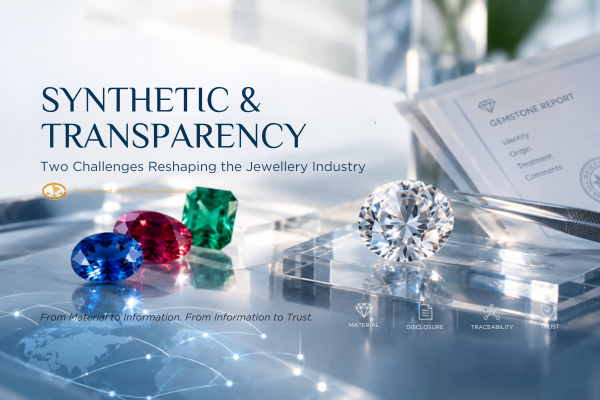
Explore how synthetic materials, disclosure, provenance and traceability are reshaping transparency and consumer trust in the global jewellery industry.
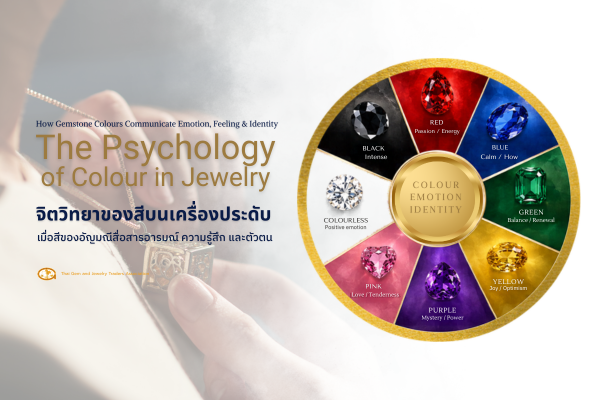
Discover how gemstone colours influence perception and communicate emotion in jewellery. Explore red, blue, green, yellow, purple, pink, white and black gemstones, plus hue, tone and saturation.