
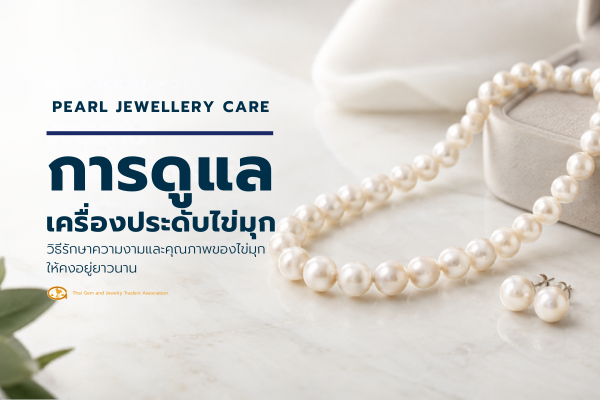
Pearls are organic gemstones with unique structures and properties, which means they require different care from many other gemstones and precious metals. The surface of a pearl consists primarily of layers of aragonite and organic substances such as conchiolin. As pearls have relatively low hardness compared with many other gemstones, their surfaces can be more susceptible to scratches and damage.
Proper care is therefore essential for preserving a pearl’s lustre, colour, and surface condition over time.
Cosmetics, perfume, hairspray, lotions, and certain personal-care products may contain ingredients that can affect the surface of pearls.
A simple rule to follow is:
Get dressed → Apply personal-care products → Apply perfume → Allow products to dry → Put on your pearl jewellery
When removing jewellery, pearls should also be taken off before cleansing the skin or applying other personal-care products.
Pearls should not come into direct contact with harsh chemicals such as jewellery cleaning solutions, bleach, or substances with highly acidic or alkaline properties.
Perspiration and moisture from the skin can also accumulate on the surface of pearls. It is therefore advisable to gently wipe pearls after wearing them.
After wearing pearl jewellery, gently wipe the pearls with a clean, soft, dry cloth to remove perspiration, skin oils, and other surface contaminants.
Avoid rough fabrics or materials that could scratch the pearl’s surface.
Pearl jewellery should not be cleaned using an ultrasonic cleaner. The vibrations may damage the pearl or affect the materials used to secure the pearl to its setting.
For jewellery combining pearls with other gemstones, the cleaning method should be selected according to the most delicate material in the piece.
Pearls can come into contact with water during normal daily activities, but pearl jewellery should not be soaked or exposed to water for extended periods. This is particularly important for pearl necklaces and pearl bracelets.
Prolonged moisture exposure may affect the stringing material or other components of the jewellery and may accelerate deterioration of the string.
Pearl jewellery should therefore be removed before swimming, bathing, or engaging in activities involving prolonged exposure to water or heavy perspiration.
Because pearls have relatively low hardness, they should be stored separately from diamonds, gemstones, or jewellery with hard edges and surfaces that could scratch them.
Pearls should preferably be stored in a soft pouch, a jewellery box lined with soft material, or a separate compartment.
Avoid storing multiple pearl strands together without protection, as the pearls may rub against one another and become scratched.
Pearl jewellery should not be placed directly near sources of heat or stored for prolonged periods in areas with high temperatures or extremely dry conditions.
Significant changes in temperature and humidity may affect the organic components and structure of pearls.
For pearl necklaces, the stringing should be inspected periodically, particularly when the necklace is worn frequently.
If the string becomes visibly stretched, dirty, worn, or shows other signs of deterioration, the necklace should be inspected by a qualified professional and restrung if necessary.
For pearl necklaces with knots between individual pearls, the knots help reduce contact and friction between the pearls. They can also help prevent all the pearls from falling off if the string breaks.
If pearls have significant surface deposits or the jewellery is particularly valuable, avoid experimenting with cleaning products without knowing how they may affect the pearls.
Consult a reputable jeweller, qualified jewellery professional, or specialist with knowledge of pearl care to determine the appropriate cleaning method.
Put pearls on last → Avoid chemicals → Wipe after wearing → Store separately and safely → Check the stringing regularly
Pearls are organic gemstones whose beauty comes from their natural structure and surface layers. Proper care not only helps preserve their lustre but also reduces the risk of scratches, chemical damage, and deterioration of the jewellery’s components.
With appropriate care, pearl jewellery can retain its beauty and remain a treasured piece that can be passed down from one generation to the next.
Pearls can come into contact with water during normal daily activities, but they should not be soaked or exposed to water for prolonged periods. This is particularly important for pearl necklaces with stringing and other jewellery components. Remove pearl jewellery before swimming, bathing, or taking part in activities involving prolonged exposure to water or moisture.
After wearing, gently wipe pearls with a clean, soft cloth to remove perspiration, skin oils, and surface dirt. Avoid harsh cleaning agents or products that are not specifically suitable for pearls.
Pearl jewellery is not recommended for cleaning with an ultrasonic cleaner, as the vibrations may damage the pearls or the materials used to secure them.
Perfume, cosmetics, lotions, and some personal-care products may contain ingredients that can affect the surface of pearls. These products should therefore be applied first and allowed to dry before putting on pearl jewellery.
Pearls have relatively low hardness compared with many other gemstones. They can therefore be scratched more easily when they come into contact with harder materials. For this reason, pearls should be stored separately from diamonds and other gemstones or jewellery that could scratch their surfaces.
Pearls should be stored in a clean, soft pouch or a jewellery box with a soft lining, preferably separately from other jewellery. Avoid storing pearls in areas exposed to excessive heat or harsh environmental conditions.
Yes. Pearls can be stored in a jewellery box, provided that it is clean and lined with soft material. Avoid prolonged storage in excessively hot or extremely dry conditions. The storage environment should minimise friction and significant changes in temperature and humidity.
There is no fixed interval, as this depends on how frequently the necklace is worn, the condition of the stringing, and how it is used. If the string becomes stretched, dirty, worn, or shows other signs of deterioration, it should be inspected by a qualified professional and restrung if necessary.
Knots between individual pearls help reduce friction between the pearls. They can also help prevent all the pearls from falling off if the string breaks. This is why knotting is commonly used for certain types of pearl necklaces.
Prolonged exposure to perspiration should be avoided. After wearing, gently wipe the pearls with a clean, soft cloth before storing them. Pearl jewellery should also be removed during activities that cause heavy perspiration.
Pearl jewellery can be worn regularly when properly cared for. However, it should be removed before activities that may expose the pearls to chemicals, water, excessive heat, or significant physical impact, such as swimming, exercising, or household cleaning.
Pearls have a layered structure composed primarily of mineral and organic materials and have relatively low hardness compared with many gemstones. They should therefore be protected from hard surfaces and friction against other jewellery.
If gentle wiping with a soft cloth does not remove the deposits, avoid using chemicals or aggressive cleaning methods. Consult a qualified jewellery or pearl-care professional to determine the appropriate treatment.
The pearl surfaces, jewellery settings, clasps, and particularly the stringing of pearl necklaces should be inspected periodically. If there are scratches, damage, loose components, or signs that the stringing is deteriorating, the jewellery should be examined by a qualified professional.
Yes. Pearls are organic gemstones and have properties that differ from mineral gemstones. Particular attention should therefore be given to protecting them from scratches, chemicals, excessive heat, and friction.
The key principles are to avoid chemicals and excessive friction, wipe pearls with a soft cloth after wearing, store them separately from other jewellery, and inspect the jewellery regularly, particularly the stringing of pearl necklaces.
Pearl jewellery with significant financial, historical, or sentimental value should be handled by a qualified professional. Avoid attempting cleaning or repairs yourself, as inappropriate methods may cause permanent damage.

Looking back through history, gemstones and jewelry have often been portrayed as symbols of love, traditionally given by men to women. Over the past decade, however, leading global jewelry publications and industry media have highlighted a significant par

Today, we proudly announce the outstanding designers whose works were selected by the international jury to receive the Gemports Award 2026.

Gemports Award 2026 – The Vivid Legacy brings together creative talents from around the world and marks the official launch of the World Gems Trade Association (WGT), highlighting Thailand’s role in fostering global collaboration across the gem and jewelr