
.png)
Pink diamonds are among the most distinctive members of the fancy-colour diamond category, attracting attention for their colour, rarity and significance in the high-end gemstone market. Behind their beauty lies a fascinating combination of geological processes, gemmological characteristics and market dynamics that influence the value of each stone.
The value of a pink diamond is not determined by colour intensity or carat weight alone. Its overall assessment also considers colour characteristics, cut, clarity, colour origin, treatments, provenance and documentation from a recognised gemmological laboratory.
For jewellery manufacturers, gemstone traders, designers and collectors, understanding these factors provides a more informed basis for evaluating pink diamonds and communicating their characteristics accurately.
Natural diamonds form deep within the Earth under conditions of high pressure and temperature. However, the pink colour found in many natural diamonds is not generally attributed to the presence of a specific trace element in the same way as the colour of certain other diamonds. Instead, it is associated with changes in the diamond's crystal structure caused by geological stress.
Research by the Gemological Institute of America (GIA), examining more than 90,000 diamonds with pink as their primary colour submitted between 2008 and 2016, found that the colour in most of these diamonds was associated with plastic deformation of the crystal lattice.
Changes at the atomic level affect how the diamond absorbs visible light, producing pink hues of varying appearance and intensity. The precise atomic mechanisms responsible for pink colouration remain an area of ongoing scientific investigation.
Reference: GIA, Why Are Pink Diamonds Pink? Researchers Dive Deep into Their Crystal Structure
Colour is a primary consideration in the assessment of fancy-colour diamonds. Three key elements help describe its appearance:
Hue: The dominant colour, such as pink, purplish pink or orangy pink.
Tone: The relative lightness or darkness of the colour.
Saturation: The strength and intensity of the colour.
The GIA grading system uses descriptive colour grades for fancy-colour diamonds, including Fancy Light, Fancy, Fancy Intense, Fancy Vivid, Fancy Dark and Fancy Deep, depending on the diamond's characteristics.
In general, pink diamonds with strong, well-balanced and highly saturated colour, particularly those graded Fancy Intense or Fancy Vivid, can attract considerable market interest. However, colour grade alone does not determine the value of every stone.
Secondary hues, such as purplish pink or orangy pink, may also be desirable. Their market appeal depends on the individual diamond's characteristics and buyer preferences.
Carat weight is another important factor. Larger natural pink diamonds with attractive colour characteristics are uncommon, and their rarity may contribute to higher prices.
Nevertheless, value does not increase at a fixed rate with weight. A meaningful comparison must also account for colour grade, clarity, cut, shape and other relevant characteristics.
Cut influences a diamond's overall appearance, light performance and the way its colour is perceived face-up.
For fancy-colour diamonds, cutting decisions often focus on presenting the colour effectively, rather than maximising brightness alone.
Shapes such as oval, cushion, pear and radiant may produce different visual effects. No single shape guarantees a higher value, as the result depends on the individual stone, its colour distribution and the preferences of the intended market.
Internal inclusions and other clarity characteristics can affect a diamond's appearance, durability and market desirability.
However, clarity should not be considered in isolation when evaluating fancy-colour diamonds. Colour can be a particularly influential factor, and a pink diamond with outstanding colour may remain desirable despite certain inclusions.
The significance of an inclusion depends on its nature, position, visibility and potential impact on the stone's structural integrity.
Determining whether a pink diamond's colour is natural, the result of treatment or associated with a laboratory-grown material is essential to an informed valuation.
Diamonds that appear similar to the unaided eye may have different colour origins and market values. Visual appearance alone cannot reliably establish whether a diamond's colour is natural or treated.
Assessment should therefore rely on a report from a qualified gemmological laboratory with expertise in coloured diamonds. Depending on the report type, GIA documentation can describe colour grade, clarity characteristics and whether the colour is natural or treated.
Accurate disclosure of colour origin and treatment is essential for transparent trading and responsible consumer communication.
Provenance refers to documented information about a gemstone's origin, ownership history or previous transactions. For certain diamonds, particularly those with an established history or a documented connection to a recognised source, provenance may enhance their appeal to collectors.
The Argyle mine in Western Australia was one of the world's best-known sources of pink diamonds. Mining operations ceased in 2020, ending new production from this source.
The closure has increased the significance of existing Argyle pink diamonds in the collector market. However, it does not guarantee that every pink diamond, including every stone associated with Argyle, will appreciate in value.
Provenance should be supported by credible documentation and considered alongside the diamond's individual characteristics, market demand and transaction conditions.
One example illustrating the potential value of exceptional pink diamonds is The Winston Pink Legacy, a 18.96-carat diamond graded Fancy Vivid Pink.
The diamond was sold by Christie's in Geneva on 13 November 2018 for CHF 50,375,000, demonstrating the market interest that can be generated by the combination of exceptional colour, substantial carat weight and rarity.
This result illustrates how several desirable characteristics can contribute to a remarkable auction price. It should not, however, be treated as a benchmark for all pink diamonds.
Auction results for exceptional stones are influenced by their individual qualities, provenance, buyer competition and the terms of sale. They may not represent the prices achievable for comparable stones in other market conditions.
Reference: Christie's, The 10 Most Expensive Pink Diamonds Sold at Christie's
For traders, collectors and prospective buyers, a systematic approach can help establish a clearer understanding of a pink diamond's characteristics and potential market value.
1. Verify the gemmological report.
Check whether the stone is natural or laboratory-grown and whether its colour is natural or treated.
2. Examine the complete colour description.
Consider the colour grade, hue modifiers and the overall appearance of the colour rather than relying on the word “pink” alone.
3. Review the diamond's physical characteristics.
Assess carat weight, shape, cut proportions, clarity characteristics and any features that may affect durability.
4. Authenticate the documentation.
Verify the report number and confirm that the report details correspond to the diamond being offered for sale.
5. Compare relevant market evidence.
Review transactions or auction results for diamonds with comparable characteristics. Consider the date, currency, sale conditions and whether the reported price includes buyer's premiums.
It is also important to understand that a gemmological report is not a market valuation. A valuation for trading, insurance or other purposes may require a separate assessment that takes account of the intended purpose, market conditions and transaction details.
For further information, visit GIA's natural coloured diamond services:
https://www.gia.edu/gem-lab-service/colored-diamond
Pink diamonds demonstrate the relationship between natural rarity, gemmological science and market demand. Their distinctive colour is a major part of their appeal, but a reliable assessment of value requires a broader understanding of carat weight, cut, clarity, colour origin, provenance and supporting documentation.
For the gem and jewellery industry, this knowledge helps professionals communicate product characteristics accurately, make more meaningful comparisons and support greater transparency in the marketplace.
Ultimately, the value of a pink diamond lies not in colour alone, but in the combination of its individual characteristics, documented identity and position within the market.
Gemological Institute of America (GIA) — Fancy Colour Diamond Quality Factors
https://www.gia.edu/fancy-color-diamond-quality-factor
GIA — Why Are Pink Diamonds Pink? Researchers Dive Deep into Their Crystal Structure
https://www.gia.edu/gia-news-research/why-pink-diamonds-pink-gia-researchers-dive-deep-into-crystal-structure
GIA — Natural Coloured Diamond Reports and Services
https://www.gia.edu/gem-lab-service/colored-diamond
Christie's — Historic Pink Diamonds Sold at Auction
https://www.christies.com/stories/10-historic-pink-diamonds-sold-at-christies-54e975e16dc44300a44631e863fe9aa6
Rio Tinto — Argyle Pink Diamonds Tender 2020
https://www.riotinto.com/news/releases/2020/rio-tintos-2020-argyle-pink-diamonds-tender-delivers-a-dazzling-set-of-results

Hong Kong imported nearly 100 tonnes of Russian gold in the first seven months of 2026, highlighting shifting global trade routes, China's growing role and sanctions compliance risks.
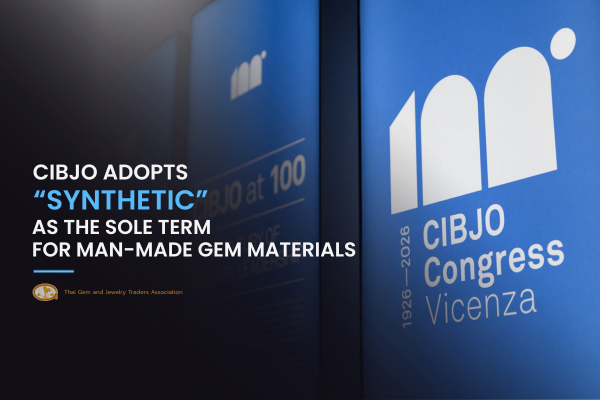
The World Jewellery Confederation (CIBJO) has announced the removal of the terms “Laboratory-Grown” and “Laboratory-Created” from its Blue Books
Explore how synthetic materials, disclosure, provenance and traceability are reshaping transparency and consumer trust in the global jewellery industry.