
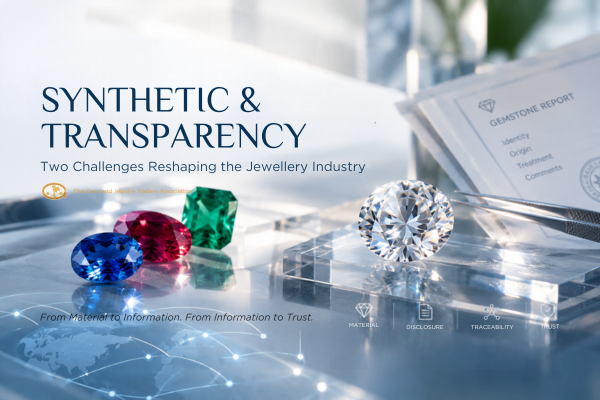
As technology advances and consumers demand more information, the jewellery industry is facing two increasingly important challenges: Synthetic and Transparency.
The growing availability of materials produced through synthetic processes has expanded the range of products available in the market. At the same time, consumers and business partners are placing greater emphasis on information about material identity, treatments, provenance, origin and traceability.
The change is therefore not only about what is being sold, but also about how the industry identifies, communicates and discloses information about what is being sold.
Advances in technology have enabled synthetic gem materials to be produced with increasing consistency and efficiency. In particular, developments in laboratory-grown diamonds and other synthetic materials have introduced new products and choices into the jewellery market.
For the industry, the challenge is not simply the ability to produce these materials. It is also the ability to identify, classify and communicate their characteristics accurately.
Materials in the jewellery market may have fundamentally different identities and origins, including:
Understanding these distinctions is important because each term communicates different information about the material and may affect how a product is understood and evaluated.
In the jewellery industry, product terminology is not simply a marketing choice. It is part of the information provided about the product.
CIBJO places significant emphasis on appropriate nomenclature to promote accurate communication and minimise the risk of misleading consumers, particularly as new materials and technologies enter the market.
For laboratory-grown diamonds and other laboratory-produced materials, appropriate terminology and clear disclosure are particularly important in distinguishing them from naturally occurring materials.
GIA also highlights the importance of identifying and disclosing laboratory-grown and treated gem materials when they are submitted for laboratory services.
As technology enables some materials to increasingly resemble their natural counterparts in appearance, accurate information and disclosure become even more important.
If Synthetic raises the question:
“What is the material?”
then Transparency raises a broader question:
“What do we know about the material, and can that information be verified?”
Traditionally, consumers may have focused on characteristics such as colour, carat weight, clarity, cut and overall appearance when purchasing a gemstone or piece of jewellery.
Today, the questions can extend further:
These questions reflect a broader shift in the information needs of consumers and businesses across the jewellery supply chain.
Effective transparency is not about providing an overwhelming amount of information. It is about providing relevant, accurate, clear and meaningful information.
Depending on the product and market, this may include:
Consumers should be able to understand clearly whether a gemstone or material is natural, synthetic, an imitation/simulant, or treated.
Where a gemstone has undergone a treatment or enhancement that is material to its characteristics or value, appropriate disclosure is an important part of responsible communication.
The terms provenance and origin should not automatically be treated as interchangeable.
Using these terms correctly is particularly important when origin or provenance information is used as part of product communication or marketing.
Another concept closely connected to transparency is traceability.
Traceability refers to the ability to follow information about a material or product through relevant stages of its supply chain.
In the jewellery industry, this may involve a chain such as:
Source → Processing → Trading → Manufacturing → Distribution → Consumer
Digital technologies can support the collection, storage and connection of information across these stages. However, technology alone does not guarantee that information is accurate.
A fundamental question remains:
“Who provided the information, and what evidence supports it?”
An effective traceability system therefore requires more than technology. It also depends on reliable data collection, appropriate documentation, defined processes and mechanisms for verification.
Synthetic materials and transparency should not be viewed as separate issues.
As technology introduces a wider range of materials into the jewellery market, the need to identify, differentiate and disclose information accurately increases accordingly.
In simple terms:
The more diverse the market becomes, the more important clear information becomes.
Synthetic materials are therefore not simply a technological issue, while transparency is not merely a marketing issue.
Both are directly connected to consumer understanding, responsible business practices and confidence in the jewellery market.
Trust in the jewellery market does not come from providing the greatest amount of information. It comes from ensuring that important information is:
Accurate
Clear
Consistent
Verifiable
When businesses can provide reliable information consistently, buyers are better equipped to make informed decisions and the risk of misunderstanding is reduced.
At an industry level, transparency can also support more consistent trading practices and strengthen confidence among manufacturers, traders, laboratories and consumers.
Use terms such as Natural, Synthetic, Imitation, Treatment, Origin and Provenance according to their established meanings and applicable industry standards.
Important information about the material, treatments and other relevant characteristics should not be obscured by marketing language.
Supplier documentation, laboratory reports and relevant supply-chain records should be maintained systematically and linked to the appropriate products or materials.
Businesses can begin by organising internal product and supplier information before progressing towards more advanced traceability systems where appropriate.
Technical information should be presented in language that consumers can understand without compromising technical accuracy.
Discussions around Natural and Synthetic materials are often presented as a competition between two categories.
From an industry perspective, however, a more important question is:
Does the buyer have accurate and sufficient information to understand what they are purchasing?
Natural gemstones, synthetic materials and other products can coexist in the same market when they are appropriately identified and clearly communicated.
The future of the jewellery industry may therefore depend less on determining “which material is better” and more on creating a market in which consumers can confidently “know what they are buying”.
Advances in production technology are making the jewellery market more diverse, while consumers and business partners are seeking greater access to reliable product information.
The industry's response therefore needs to extend beyond production technology to include better information management, disclosure and traceability.
Ultimately:
Synthetic creates more choices.
Transparency creates understanding.
Traceability supports verification.
Trust strengthens the market.
When these elements work together, the jewellery industry can embrace new technologies and materials while maintaining what remains fundamental to a healthy market: credibility, informed choice and consumer confidence.
Synthetic refers to a man-made material that corresponds to its natural counterpart in chemical composition and crystal structure, where applicable under established industry definitions. The term should be used according to recognised industry nomenclature and applicable standards.
The identity of a material is important information for consumers and businesses. Clear disclosure helps buyers understand what they are purchasing, reduces the risk of misunderstanding and supports confidence in the jewellery market.
Transparency means providing relevant product information accurately, clearly and in a manner that does not mislead. Depending on the product, this may include material identity, treatments, provenance, origin and traceability information.
Provenance generally refers to the history, documentation or chain of custody associated with a gemstone or product. Origin may refer to the geographical source of a gemstone. Establishing gemstone origin can require appropriate laboratory testing and expert analysis.
Traceability enables relevant information about materials and products to be followed through parts of the supply chain. It can support transparency, verification and confidence among businesses and consumers.
Businesses can start by using accurate terminology, maintaining reliable product and supplier records, disclosing material information appropriately and developing traceability processes suited to their operations and supply chain.
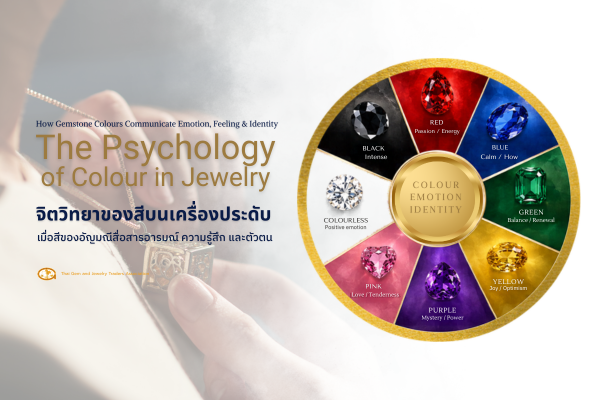
Discover how gemstone colours influence perception and communicate emotion in jewellery. Explore red, blue, green, yellow, purple, pink, white and black gemstones, plus hue, tone and saturation.
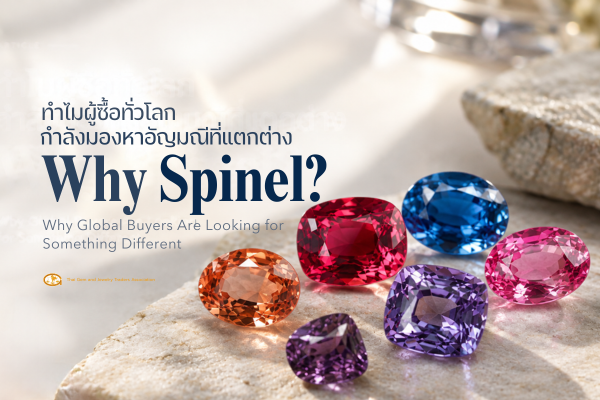
Discover Spinel, a coloured gemstone gaining attention for its distinctive colours, rarity and unique characteristics. Learn how Spinel differs from ruby and what to consider before buying.
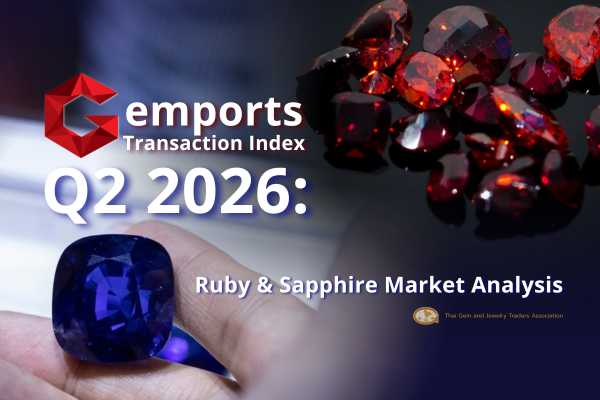
Explore the Gemports GTI Q2 2026 analysis of ruby and sapphire markets, including large-carat price trends, transaction volumes, capital rotation and Q3 outlook.