
.png)
In the past, the worlds of investment and fashion often ran on parallel tracks. One focused on Return on Investment (ROI), while the other centered on aesthetics and beauty. However, over the last decade, we have witnessed a "Convergence of Value"—a phenomenon where jewelry and gemstones are no longer mere accessories, but have evolved into one of the world's most robust Alternative Asset Classes.
Analysis of international market data, including the latest Knight Frank Luxury Investment Index (KFLII) and reports from global consultants like Bain & Company, consistently shows that the "Hard Luxury" segment (watches and jewelry) has achieved growth rates that impressively outpace inflation.
"In an era of stock market volatility and high-risk cryptocurrencies, gemstones stand firm as a tangible Store of Value—something that can be worn, enjoyed, and passed down as a legacy."
Modern consumer behavior, particularly among Gen Z and Millennials in Europe and the US, has shifted from "Fast Fashion" to "Investment Pieces." They seek jewelry that showcases their lifestyle today while retaining a strong Resale Value for tomorrow.
To successfully merge fashion with investment, it is not simply about buying any piece; it requires three pillars recognized by the global market:
Brand & Provenance: At world-class auction houses like Sotheby’s or Christie’s, "Signed Pieces" from legendary houses such as Cartier, Van Cleef & Arpels, or Bulgari consistently fetch prices far above estimates. This reflects that "design artistry" holds value equal to the raw materials themselves.
Scarcity of Colored Gemstones: This is Thailand’s greatest strength. Market data reveals that the "Big Three" (Ruby, Sapphire, and Emerald) of high quality with minimal treatment (No Heat / Minor Oil) show a continuous upward price trajectory. Demand from Chinese and Middle Eastern markets has transformed these colored stones into "Fashion Items" that the global elite must possess for prestige.
Heirloom Quality (The 4Cs and Beyond): Investable fashion is "Timeless." Diamonds with international certifications (GIA, HRD) or gemstones with reports from reputable labs (such as GRS, AIGS, GIT) are the new standard. Global consumers demand transparency and guaranteed quality.
As the "Capital of Colored Gemstones," Thailand has a massive opportunity to leverage this strategy. We should no longer sell merely "beauty" or "craftsmanship," but must market "Investment Value" alongside them.
Strategies for Thai Entrepreneurs:
Curated Collections: Present collections by highlighting the provenance and rarity of the stones, using Storytelling to add value.
Educate the Customer: Inform clients on why certain pieces are "Investment Grade" and how they can be a more stable store of wealth compared to luxury handbags or cars.
Design for Longevity: Create Contemporary designs that function as "Wearable Art"—practical for daily life yet classic enough to be an heirloom.
The convergence of fashion and investment is not a passing trend but a permanent evolution in consumer behavior. For the Thai gemstone industry, pivoting toward the concept of "Wearable Wealth" will be the key to capturing the global market—offering both exquisite beauty and sustainable returns.
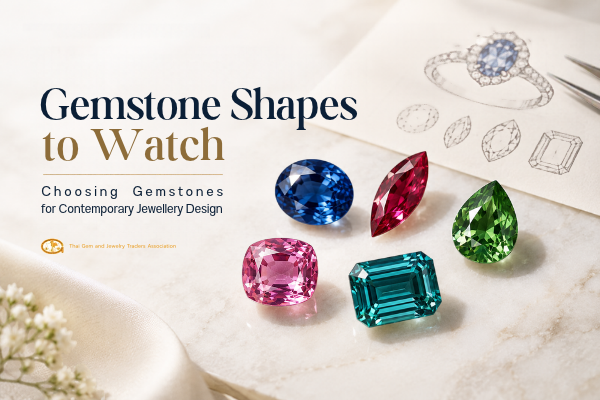
Explore Oval, Marquise, Pear and Cushion gemstone shapes, how to select them for contemporary jewellery design, and how proportions, cutting quality, rarity and market demand influence value.
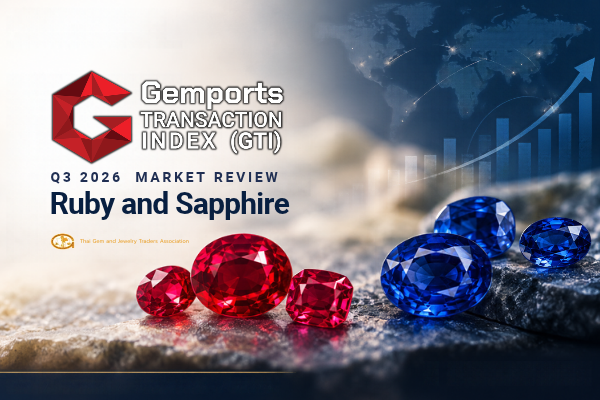
Explore GEMPORTS Q3 2026 market insights on rubies and sapphires, as GTI rises on premium gemstone transactions amid stable prices and constrained supply.
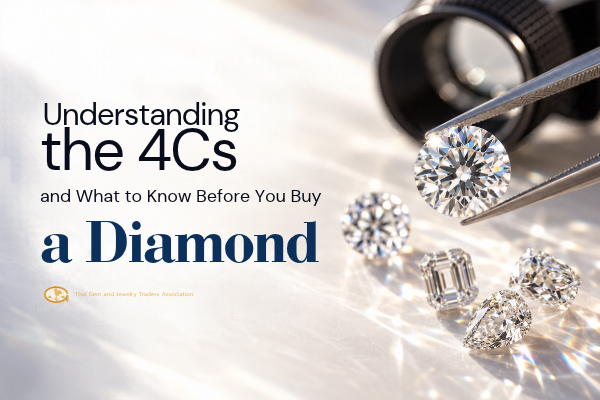
Learn how to choose a diamond with this guide to the 4Cs: Cut, Colour, Clarity and Carat Weight. Understand natural and laboratory-grown diamonds, grading reports and how to make an informed purchase.