

With gold prices constantly fluctuating, one question many consumers ask is:
“How much could I get if I sold the gold I own?”
In fact, consumers can estimate the value of their gold themselves with just two key pieces of information:
Gold purity
Gold weight
Understanding these two factors can help consumers make a preliminary estimate of their gold's value before deciding to sell.
Many people mistakenly believe that karat gold, commonly referred to as K gold, is fake or has no value. In reality, karat (K) is simply a unit used to indicate the purity of gold.
Common gold purity levels include:
| Karat (K) | Gold Purity |
|---|---|
| 24K | 99.99% |
| 23K | 96.5%* |
| 22K | 91.6% |
| 18K | 75.0% |
| 14K | 58.3% |
| 9K | 37.5% |
Note: The conventional mathematical equivalent of 23K is approximately 95.83% gold, based on 23/24. However, 96.5% is the established fineness standard commonly used for gold bars and jewellery in Thailand.
Gold purity can be estimated using the following formula:
Gold Purity (%) = Karat ÷ 24 × 100
For example:
18 ÷ 24 × 100 = 75%
This means that 18K gold contains approximately 75% pure gold by weight, with the remainder consisting of other metals.
In Thailand, gold bars and gold jewellery commonly traded in the domestic market typically have a gold purity of 96.5%.
In addition to purity, weight is another important factor in determining the value of gold.
Commonly used weight units include:
Baht weight
Grams
For example, a standard Thai gold bar weighing one baht typically has the following characteristics:
Gold purity: 96.5%
Weight: Approximately 15.244 grams
The greater the amount of gold, the higher its estimated value, assuming the same purity and reference gold price.
It is important to note that Thailand uses different standard weights for gold bars and gold jewellery. The appropriate weight standard should therefore be used when calculating the value of each type.
Before selling gold, consumers should always check the daily gold buying price, as this provides the reference price used by gold buyers to assess its value.
For a simplified estimate based on the Thai gold bar price:
Estimated Gold Value = Buying Price × (Gold Purity (%) ÷ 96.5) × (Weight in Grams ÷ 15.244)
Suppose you have a gold item with the following characteristics:
Gold purity: 34.5%
Weight: 7.2 grams
Daily buying price for 96.5% gold: THB 64,550 per baht weight
The calculation is:
THB 64,550 × (34.5 ÷ 96.5) × (7.2 ÷ 15.244)
Estimated value: approximately THB 10,900
This calculation provides a preliminary estimate of the item's value based on its gold content. The actual selling price may differ depending on the verified purity, applicable buying price, testing results and the buyer's pricing policy.
Some consumers believe that gold containing only 10% or 20% gold has little or no value. However, as long as an item contains gold, it may retain intrinsic value based on the amount of pure gold it contains.
Consider the following examples.
Total weight: 10 grams
Gold purity: 10%
Pure gold content:
10 × 10% = 1 gram of pure gold
Total weight: 5 grams
Gold purity: 20%
Pure gold content:
5 × 20% = 1 gram of pure gold
Although the two items have different weights and gold purity levels, both contain the same amount of pure gold: 1 gram.
Using the following reference figures:
Gold purity: 96.5%
Gold bar weight: 15.244 grams
Buying price: THB 64,550 per baht weight
The estimated value of one gram of pure gold can be calculated as follows:
THB 64,550 ÷ (15.244 × 0.965) = approximately THB 4,387 per gram
Based on this calculation, both items in the examples contain 1 gram of pure gold and have a similar estimated intrinsic gold value of approximately THB 4,387 each.
This example demonstrates that although two gold items may differ in purity and weight, they can have a similar intrinsic gold value if they contain the same amount of pure gold.
However, the actual selling price may differ depending on the buyer's assessment, refining costs and other applicable deductions.
When estimating the value of gold, consumers should not consider purity or weight in isolation. Both factors must be evaluated together.
The greater the total amount of pure gold an item contains, the higher its estimated intrinsic gold value, assuming the same reference gold price.
Whether the gold purity is 96.5%, 75%, 40%, 20% or even 10%, its value can be estimated based on the actual amount of pure gold it contains.
By understanding gold purity, checking the weight and referring to the daily gold buying price, consumers can make more informed decisions before selling their gold.

Learn about Thailand’s PP.01.5 VAT exemption, eligible gemstones and precious metals, association membership requirements, supporting documents, and application procedures for gem and jewellery businesses.
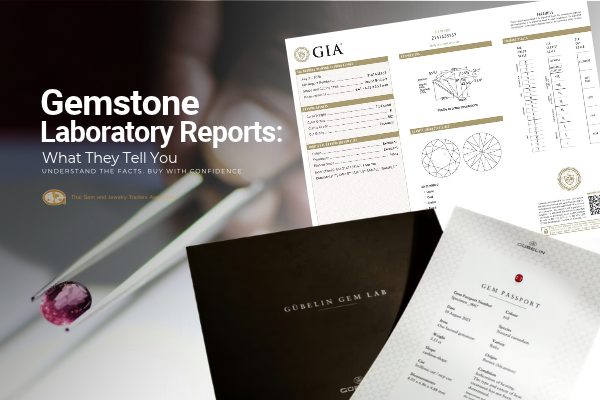
Learn what gemstone laboratory reports reveal about gemstone identity, treatments, and geographic origin—and what they cannot tell you about quality, market value, and provenance.

Discover the differences between natural, synthetic and imitation materials. Learn why origin, rarity and authenticity matter, and what consumers should know before purchasing valuable items.