
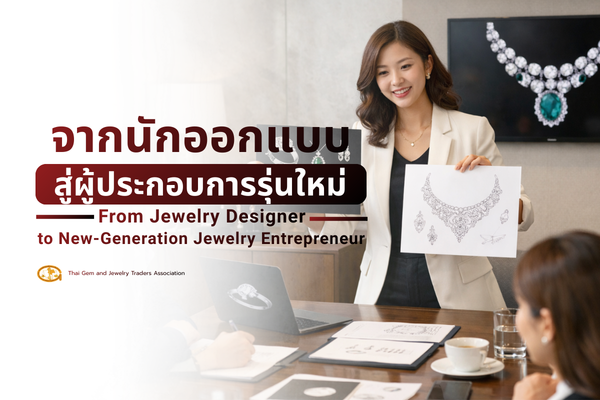
From Jewelry Designer to Modern Jewelry Entrepreneur: A Complete Guide from Design to Branding
For those who are fascinated by the brilliance of gemstones, jewelry design is not merely an artistic practice that expresses beauty through precious metals and gemstones—it is also the starting point for building a brand and a business in the gems and jewelry industry. In an era where digital technology and social media play an increasingly important role, emerging designers can transform their imagination into real products and successfully develop them into entrepreneurial ventures.
This article compiles essential knowledge, from the process of finding inspiration and developing sketches to using design technology and implementing transparent marketing strategies in accordance with international standards. It serves as a guide for those who aspire to move from jewelry designer to modern jewelry entrepreneur.
At the heart of jewelry design lies inspiration and storytelling. Outstanding pieces often stem from a clear and unique concept. Designers should therefore cultivate the habit of observing their surroundings in order to continuously discover new ideas.
Nature is an endless source of inspiration. The shapes of flowers, leaves, and natural structures—such as the crystalline structure of snowflakes, patterns on butterfly wings, or the flowing lines of tree roots—can all be translated into fascinating jewelry structures and decorative motifs.
Architectural forms from different eras can inspire jewelry designers in remarkable ways, such as:
The elegant curves of Art Nouveau
The simplicity of Minimalism
The geometric forms of Art Deco
These structural ideas can be adapted to create jewelry designs that are both balanced and distinctive.
Various art forms, including paintings, sculptures, and music, can be translated into lines, shapes, and color palettes for jewelry design. For example, color combinations in fine art can inspire gemstone pairings, while the emotional tone of music can influence the overall design style.
Ancient patterns, pictographic scripts, and traditional attire often carry profound cultural meanings. Incorporating these elements into jewelry design can add cultural depth and symbolic value to each piece.
Inspiration can also come from objects found in daily life. The shape of antique keys, patterns on ceramic plates, or the spiral of a rope can all become distinctive design concepts when viewed from a new perspective.
Once a concept has been developed, the next step is translating it into a sketch, which is an essential language for designers to communicate their ideas to production teams or master craftsmen.
Before sketching, designers should gather reference images, color palettes, textures, and keywords that reflect the concept of the design. This helps establish a clear creative direction.
Complex designs often begin with simple geometric forms such as circles, squares, or triangles. These shapes help define the primary structure of the piece.
Designers should illustrate the piece from multiple angles, such as:
Front View – to present the main design
Side View – to show thickness and structural details
Top View – to illustrate gemstone placement
Perspective View – to provide an overall three-dimensional impression
Important information should be specified in the sketch, including:
Type of gemstone
Gemstone size
Materials used (such as silver, gold, or white gold)
Proportions of the final piece
Detailed annotations help production teams clearly understand the designer’s intentions.
Shading adds dimension to sketches, allowing designers to illustrate curvature, depth, and the brilliance of gemstones more realistically.
Today, CAD (Computer-Aided Design) technology has become an essential tool in jewelry design. It allows designers to create 3D models that can be rotated, examined from all angles, and refined before actual production.
Tinkercad – Easy to use and ideal for learning basic 3D modeling
Blender – A powerful free program with abundant learning resources
SketchUp – Suitable for geometric modeling and structural design
Rhinoceros 3D (Rhino) – An industry standard for jewelry design
MatrixGold / RhinoGold – Advanced jewelry design tools built on Rhino
3Design – Specialized software designed specifically for jewelers
Jewelry CAD – A long-standing jewelry design software popular since the 1990s
These technologies enable designers to develop their ideas more quickly and accurately while also creating prototypes efficiently for production.
A great design is only the beginning of a jewelry business. Bringing products to market requires transparent and trustworthy marketing strategies, especially when selling internationally in markets such as the United States, where strict regulations are enforced by the Federal Trade Commission (FTC).
1. Clearly disclose advertisements
If influencers are hired or products are provided for review, brands should disclose the partnership using hashtags such as
#Ad, #Sponsored, or #PaidPartnership.
2. Use product images that accurately reflect reality
Photos should show the product from multiple angles, specify actual size, and include images of the jewelry being worn to help customers understand the true proportions.
3. Provide complete gemstone information
Brands should disclose the type of gemstone and any treatments, such as heat treatment or dyeing, in accordance with international standards.
4. Respond professionally to customers
Communication on social media should remain polite, transparent, and free from exaggerated claims.
5. Create educational content
Articles or posts about gemstone buying guides, jewelry care, or jewelry trends can enhance credibility and improve a brand’s visibility in search engines such as Google.
1. Fake reviews
Creating fake accounts to post reviews or paying for reviews without actual product use can damage brand credibility and may lead to legal consequences.
2. Misrepresenting materials
Materials must be described accurately. For example, synthetic diamonds must clearly be identified as laboratory-created gemstones.
3. Concealing advertising disclosures
Hiding advertising disclosures or using unclear hashtags may mislead consumers and could violate legal regulations.
When designers successfully integrate imagination, craftsmanship, technology, and brand credibility, they can transform their creative work into sustainable businesses capable of competing in the global jewelry market.
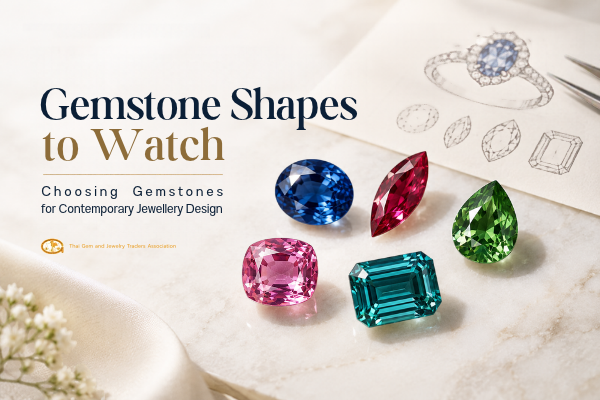
Explore Oval, Marquise, Pear and Cushion gemstone shapes, how to select them for contemporary jewellery design, and how proportions, cutting quality, rarity and market demand influence value.
Explore GEMPORTS Q3 2026 market insights on rubies and sapphires, as GTI rises on premium gemstone transactions amid stable prices and constrained supply.
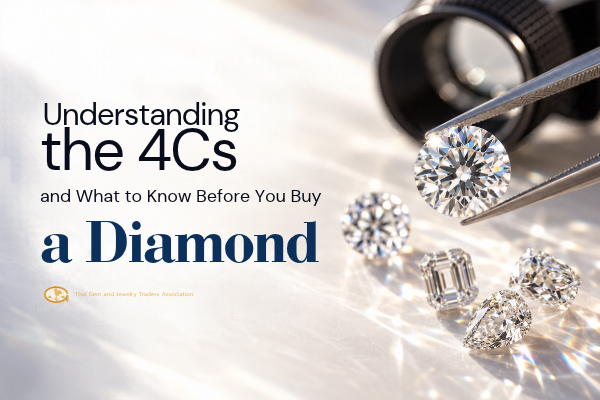
Learn how to choose a diamond with this guide to the 4Cs: Cut, Colour, Clarity and Carat Weight. Understand natural and laboratory-grown diamonds, grading reports and how to make an informed purchase.