
.png)
When we speak of "Opals," many immediately picture a white gemstone shimmering with a beautiful rainbow iridescence. But did you know that beneath that beauty lies a hidden historical record of our planet? An opal is not merely a beautiful stone; it is a geological miracle—a perfect fusion of "rock" and "water."
This article will take you deep into the "Dynamics of Color" from sources around the globe, helping you understand why every single opal is a unique masterpiece that can never be replicated.
Unlike other gemstones, Opals do not possess "color" from chemical pigments. Instead, their magic stems from their internal Microstructure.
Imagine the interior of an opal is filled with tiny ping-pong balls (silica spheres) stacked in orderly rows. When light shines through the gaps between these spheres, it undergoes Diffraction, scattering into the rainbow hues we call "Play-of-Color."
Red (The Rarest): Created by larger spheres, approximately 0.2 microns in diameter.
Blue/Purple (The Most Common): Created by smaller spheres, approximately 0.14 microns in diameter.
Did You Know? Opals are categorized into two main groups: Precious Opal (displays rainbow play-of-color) and Common Opal (no rainbow, valued for its solid body color).
Australia is the superpower of the opal world, holding over 95% of the global market. The distinct feature here is that these opals form within "Sedimentary" rock layers. This formation takes millions of years, resulting in opals that are highly stable, durable, and resistant to cracking.
Key Highlights:
Lightning Ridge (The King of Black Opals): The source of the most valuable Black Opals in the world. The pitch-dark body tone acts as a stage, allowing the rainbow play-of-color to pop with astonishing vividness.
Queensland (The Strength of Boulder Opals): These opals form within the cracks of Ironstone. They offer a raw, cool, and natural aesthetic, with electric blues or emerald greens contrasting perfectly against the dark brown rock matrix.
A newer source shaking up the industry, Ethiopian opals are born from "Volcanic" activity. This faster formation process creates gems with incredible transparency and intense, neon-like fire.
This is a secret every collector must know! Opals from the Wollo province act like sponges.
When Wet: The opal may turn from milky to completely clear, causing the rainbow color to temporarily disappear.
When Dry: The vibrant colors return to their original state.
Caution: Because of this porosity, never expose Ethiopian opals to oil or chemicals. Impurities can seep inside and permanently ruin the color.
If Australia is mystery, Mexico is pure heat! Opals here are famous for their "Body Color"—vivid oranges, reds, and sunny yellows, looking like fire trapped inside a stone.
Fire Opal: Often cut into Faceted shapes (like diamonds) to show off their clarity and intense saturation.
Cantera Opal: Cut to preserve the pinkish host rock (rhyolite) surrounding the gem. It looks like peering into a dinosaur egg to find a jewel hidden inside.
A rising trend in the jewelry world is the appreciation of Common Opal, which focuses on pastel tones and natural patterns rather than play-of-color.
Pink Opal (Peru & Australia): A sweet, soft pink perfect for minimalist jewelry styles.
Blue Opal (The Andes): A blue-green hue reminiscent of the Caribbean Sea, often featuring black dendritic (tree-like) patterns that look like fine art.
Every opal is a piece of art created by nature—a one-of-a-kind existence. When you own an opal, you aren't just holding jewelry; you are holding a fragment of the Earth's history in the palm of your hand.
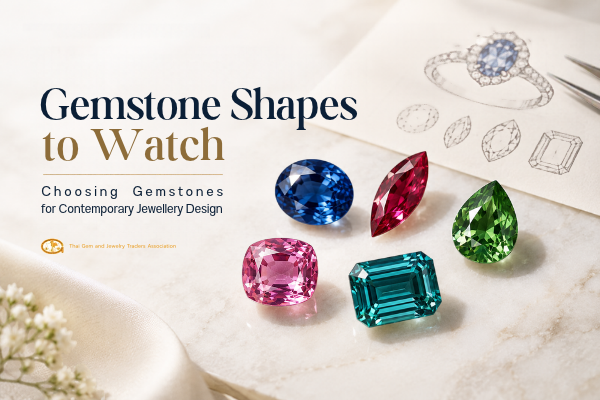
Explore Oval, Marquise, Pear and Cushion gemstone shapes, how to select them for contemporary jewellery design, and how proportions, cutting quality, rarity and market demand influence value.
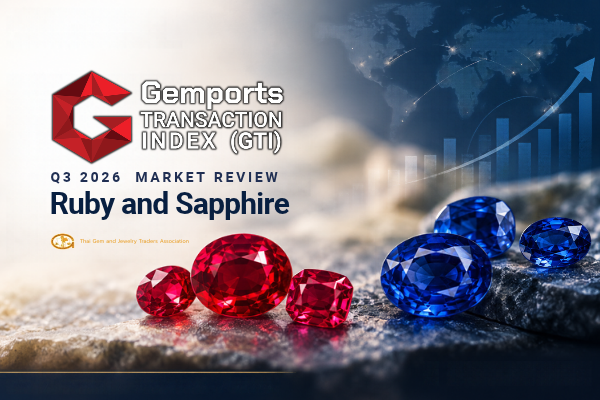
Explore GEMPORTS Q3 2026 market insights on rubies and sapphires, as GTI rises on premium gemstone transactions amid stable prices and constrained supply.
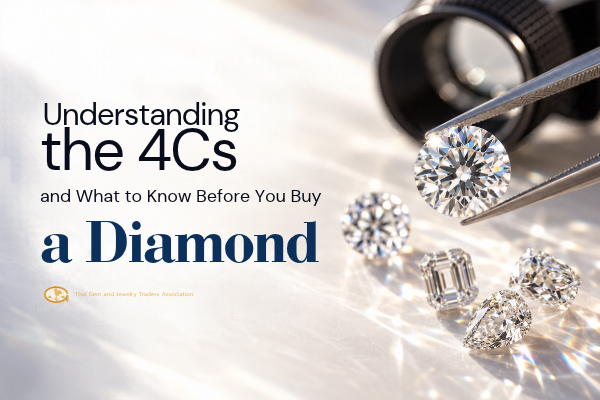
Learn how to choose a diamond with this guide to the 4Cs: Cut, Colour, Clarity and Carat Weight. Understand natural and laboratory-grown diamonds, grading reports and how to make an informed purchase.