
TGJTA Feature Article | Gemstone Cutting, Jewellery Design and Market Value
Gemstone shape and cutting style play an important role in connecting the natural beauty of a gemstone with the art of jewellery design. They influence the character of a piece, the balance of its composition, and the way colour, brilliance and proportions are perceived.
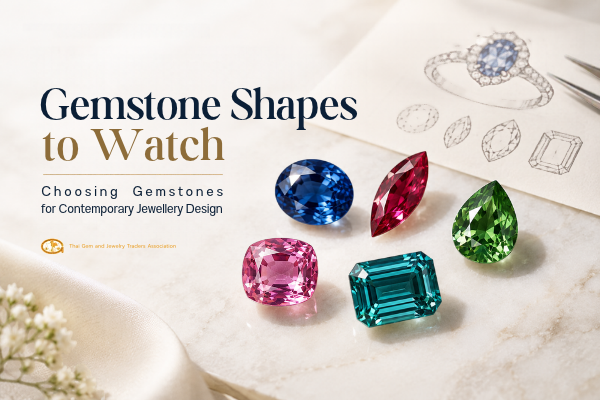
As contemporary jewellery design places increasing emphasis on individuality and distinctive silhouettes, shapes such as Oval, Marquise, Pear and Elongated Cushion offer designers and jewellery businesses a range of possibilities. These shapes can be incorporated into statement pieces, multi-stone arrangements and modern settings to create distinctive designs.
However, a particular shape is not necessarily more valuable simply because it is fashionable or less commonly encountered. A gemstone's value depends on several factors, including its variety, colour, clarity, cutting quality, proportions, rarity and market demand.
Each gemstone shape has its own visual character, influencing how colour, brilliance and the overall proportions of a jewellery piece are perceived. The best choice depends on the design concept, the characteristics of the gemstone and the intended use of the finished piece.
1. Oval Cut — A Classic Shape with Versatile Appeal
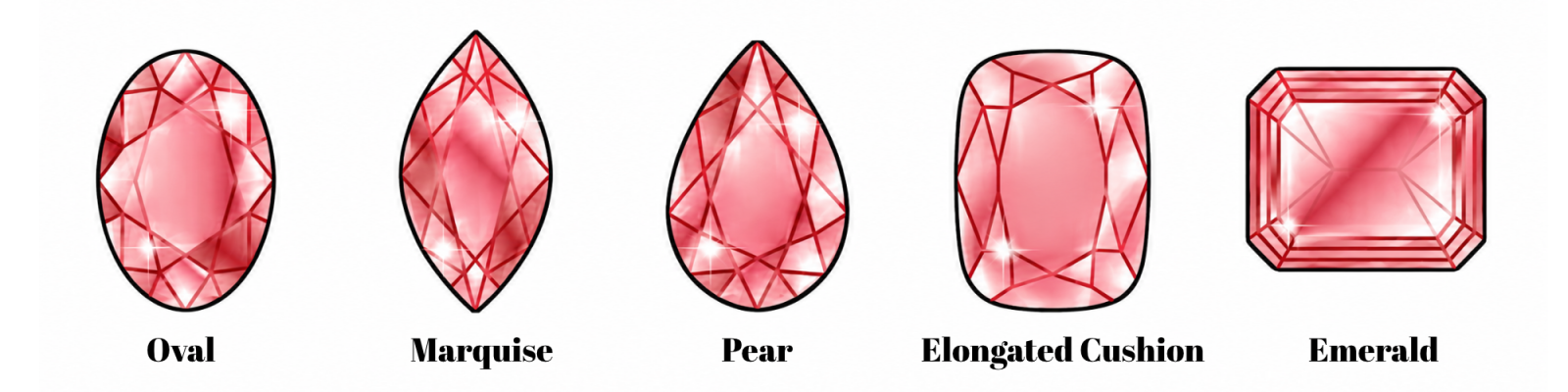
The Oval Cut combines the elegance of a rounded outline with an elongated silhouette. It works well as a centre stone in rings, pendants and earrings, while its length can create a visual effect that draws the eye along the design.
Best suited to: Contemporary classic jewellery, centre-stone rings and designs that balance simplicity with visual impact.
What to consider: Assess the symmetry of the outline, colour distribution and the presence of areas where light passes through the gemstone without sufficient reflection, creating a see-through effect known as windowing.
2. Marquise Cut — Elongated Lines with a Distinctive Character
The Marquise Cut features an elongated body with two pointed ends. Its tapered silhouette introduces direction and movement into a design, allowing a piece to stand out without necessarily relying on a larger gemstone.
Best suited to: Rings with horizontal or diagonal stone settings, elongated earrings, and multi-stone designs inspired by leaves, petals or starburst patterns.
What to consider: Check that both ends are balanced and well formed. The pointed tips also require appropriate setting protection to reduce the risk of chipping or damage.
3. Pear Cut — A Fluid Combination of Curves and Tapered Lines
The Pear Cut, also known as the drop shape, combines a rounded end with a pointed tip. This contrast creates a graceful silhouette and a clear visual direction, making it useful for designs that require movement or a focal point.
Best suited to: Pendants, drop earrings and graduated arrangements featuring gemstones of different sizes.
What to consider: Examine the balance of the curved outline, the position of the tip and the orientation of the stone in its setting to achieve a harmonious result.
4. Elongated Cushion — Soft Edges with a Defined Structure
The Cushion Cut has a square or rectangular outline with rounded corners. An elongated version introduces a longer silhouette while retaining the softness of its curved edges, combining a contemporary appearance with a classic character.
Best suited to: Centre-stone rings, jewellery featuring ruby, sapphire or spinel, and designs that seek a modern interpretation of traditional forms.
What to consider: Evaluate the facet pattern, colour consistency and light performance. Stones with similar outlines can look very different depending on their cutting proportions and optical characteristics.
5. Emerald Cut — Clean Lines and Step-Cut Elegance
The Emerald Cut typically features a rectangular outline with cropped corners and step-cut facets. Rather than emphasising the lively flashes associated with brilliant-style cutting, it highlights the gemstone's broad, open face and the visual character of its colour.
Best suited to: Geometric jewellery, minimalist designs and pieces that use repeated stones to create clean, continuous lines.
What to consider: Clarity, colour consistency and symmetry are particularly important because the broad facets may make inclusions and other internal characteristics easier to see.
These shapes should not be interpreted as a definitive ranking of current market popularity. Rather, they represent design options with potential for contemporary jewellery collections. The Gemological Institute of America (GIA) provides guidance on gemstone cutting and shape, recognising the role of design preferences and cutting characteristics in how gemstones are evaluated.
Choosing a gemstone should not begin and end with the latest trend. Designers should first consider the concept of the piece, the role of the gemstone within the composition and how the jewellery will be worn.
|
Design objective |
Shapes to consider |
Design advantages |
|---|---|---|
|
Creating a statement centre stone |
Oval, Elongated Cushion |
Establish a focal point and provide a balanced composition |
|
Emphasising movement and direction |
Marquise, Pear |
Introduce tapered lines and guide the eye |
|
Creating a geometric aesthetic |
Emerald, Elongated Cushion |
Complement clean lines and structured forms |
|
Arranging multiple gemstones |
Marquise, Pear, Oval |
Create leaf, floral, graduated or continuous-line patterns |
|
Highlighting gemstone colour and character |
Select according to the variety, colour and quality |
Allow the gemstone's natural characteristics to inform the design |
For jewellery businesses, design decisions should also take manufacturing costs into account. Pointed shapes may require specially designed settings for protection, while elongated stones can affect the balance and proportions of rings and earrings. Multi-stone designs may require additional selection to ensure consistency in size, colour and outline.
Even when two gemstones have the same shape and carat weight, they may differ in face-up dimensions, brightness, brilliance and overall appearance. These differences arise because cutting involves more than achieving a particular outline: it also requires careful consideration of the gemstone's optical properties and the way light interacts with its facets.
Four factors deserve particular attention.
This ratio has a direct influence on a gemstone's visual character. A longer Oval may appear more slender, while an elongated Marquise creates a stronger sense of direction. There is no single ideal ratio for every gemstone; the choice should reflect the desired outline, visual balance and design purpose.
Examine whether the gemstone appears evenly bright, whether prominent dark or dull areas interrupt its appearance, and how its reflections change as it moves. In fancy-shaped diamonds, GIA research has examined visual preferences relating to optical effects, including windowing. Preferences for some light patterns can vary among observers, so evaluation should consider both the stone's performance and the intended market.
The outline should be balanced and consistent with the intended shape. An Oval should have a harmonious curve, while a Marquise should show balanced ends and side profiles. Polish, facet junctions and girdle thickness should also be examined, particularly around pointed tips, where damage may be more likely.
For ruby, sapphire, spinel and other coloured gemstones, cutting should enhance the material's natural colour rather than simply produce a desired outline. Inappropriate depth or facet arrangement may make colour appear too dark, too light or unevenly distributed. The result depends on the gemstone variety and its individual optical properties.
A well-chosen cut should balance appearance, proportions and the characteristics of the rough material. Maximising weight alone does not necessarily produce the most attractive finished gemstone.
A less commonly encountered shape may attract attention from designers and collectors, but rarity of shape alone does not guarantee a higher price. A gemstone's market value reflects several factors working together.
|
Factor |
Influence on value |
|---|---|
|
Colour and colour consistency |
Major considerations for coloured gemstones, including hue, saturation, tone and colour distribution |
|
Carat weight and dimensions |
Fine-quality gemstones in commercially desirable sizes may command higher per-carat prices, although pricing patterns vary by gemstone |
|
Cutting quality |
Symmetry, proportions, polish and light performance affect visual appeal and perceived quality |
|
Rarity |
Scarcity of a particular variety, colour, quality, size or recognised origin may support value |
|
Market demand |
Shapes that suit current designs or consumer preferences may attract stronger demand, although trends can change |
|
Origin and treatments |
For certain gemstones, documented geographic origin and treatment status can influence market value |
GIA identifies multiple value factors for coloured gemstones, with their relative importance varying by gemstone type and market. Shape and cutting quality are part of the assessment, but they should not be considered in isolation.
In practice, cutting a particular shape may require rough material with suitable dimensions and characteristics, as well as specialist skills. A design that results in greater weight loss or requires additional cutting time may increase production costs. However, higher production costs do not necessarily translate into a higher selling price.
For buyers and jewellery businesses, meaningful price comparisons should therefore be made between gemstones with comparable varieties, colour, quality, dimensions, treatment status and documented origin, rather than relying on the shape name alone.
Using gemstone shapes to differentiate a jewellery collection requires both creative thinking and a practical understanding of materials, manufacturing and customer preferences.
Start with the gemstone itself. Assess its colour, proportions and cutting quality before finalising the setting, so the design complements the stone's natural characteristics.
Test proportions before production. Use sketches, physical models or 3D renderings to explore different orientations and arrangements, particularly for multi-stone designs.
Design settings around the shape. Consider structural strength, points of contact, protection for pointed ends, wearing comfort and ease of maintenance.
Evaluate the full production cost. Include gemstone acquisition, cutting, matching stones into sets, setting design, manufacturing and material loss.
Monitor customer demand. Review sales, customer feedback and actual purchasing patterns to distinguish emerging design trends from sustained commercial demand.
Combining these considerations can help businesses develop collections that are visually distinctive while remaining practical to manufacture and commercially relevant.
Oval, Marquise, Pear, Elongated Cushion and Emerald Cut each offer distinct possibilities for contemporary jewellery design. They can be used to create statement pieces, emphasise flowing lines, introduce geometric structure or bring multiple gemstones together in a cohesive composition.
However, choosing the right shape involves more than following a trend. It requires an understanding of the relationship between shape, proportions, cutting quality, gemstone colour and the intended design.
For the gem and jewellery industry, combining gemmological knowledge with creative design and market awareness is essential to developing distinctive, high-quality products that respond to consumer preferences. Ultimately, the most successful designs are those in which the gemstone's natural characteristics, the craft of cutting and the designer's vision work together to create lasting appeal.
1. Gemological Institute of America (GIA) — Colored Gemstone Value Factors
2. Gemological Institute of America (GIA) — Colored Stone Cut Quality: What to Look For
3. Gems & Gemology, GIA, Fall 2024 — Observations of Oval-, Pear-, and Marquise-Shaped Diamonds: Implications for Fancy Cut Grading
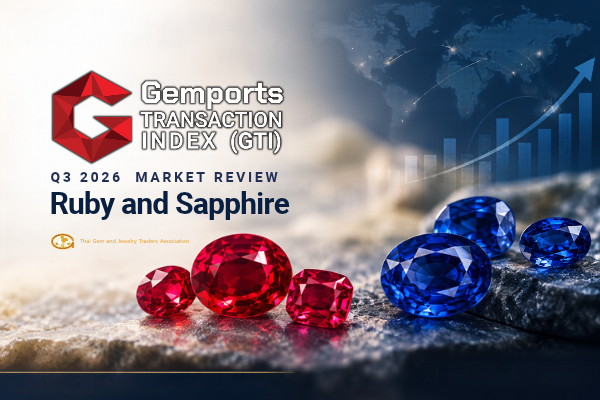
Explore GEMPORTS Q3 2026 market insights on rubies and sapphires, as GTI rises on premium gemstone transactions amid stable prices and constrained supply.
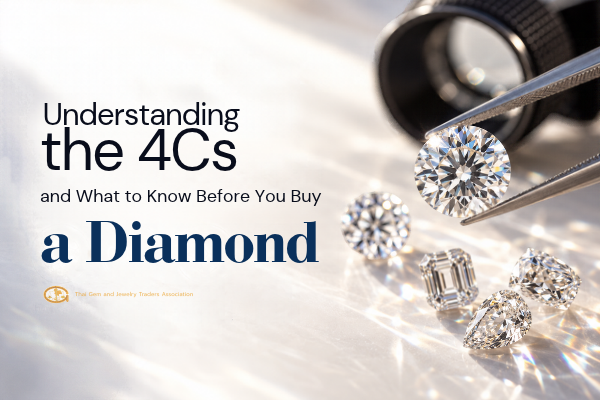
Learn how to choose a diamond with this guide to the 4Cs: Cut, Colour, Clarity and Carat Weight. Understand natural and laboratory-grown diamonds, grading reports and how to make an informed purchase.
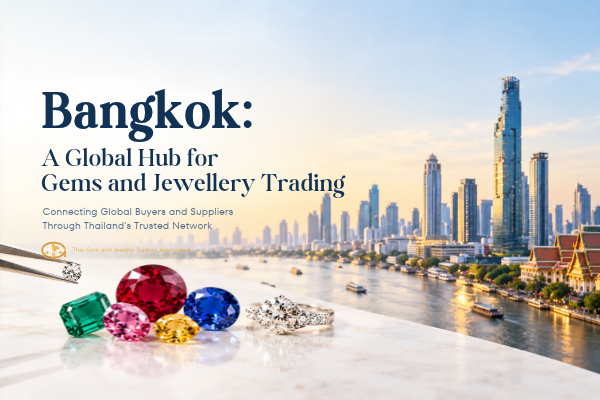
Explore Bangkok’s role in global coloured gemstone trading through Mahesak Road, Silom–Surawong, Yaowarat and Charoen Krung, where specialised business networks support Thailand’s gems and jewellery industry.