
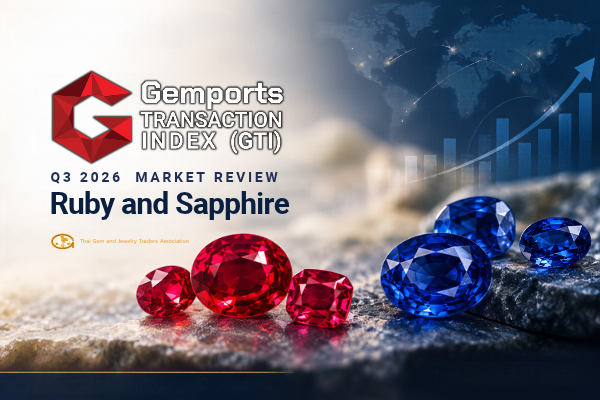
The third quarter of 2026 highlighted a growing divide between premium large-carat gemstones and commercial-grade material. The Gemports Transaction Index (GTI) advanced as transactions concentrated in the premium segment, rather than as a result of broad-based per-carat price increases.
According to GEMPORTS press releases issued in October 2026, the global ruby and sapphire markets underwent a significant structural shift in Q3 2026. However, overall transacted unit prices across origin and treatment categories remained broadly aligned with Q2 levels.
The key development was not a market-wide increase in gemstone prices, but the concentration of transactions in large-carat, premium-quality stones. These segments carry greater weighting in the calculation of the Gemports Transaction Index (GTI), pushing the headline indices higher even as commercial-grade prices remained stable and trading activity showed no clear recovery.
Q3 2026 GTI Highlights
Natural Rubies
Myanmar : 67.2 % QoQ ( prev . – 6.2 % ) | 53.3 % YoY ( prev . -44.1 % )
Africa & Other Sources : 60.2 % QoQ ( prev . -1.9 % ) | 47.9 % YoY ( prev . -41.1 % )
Heated Rubies
Myanmar : 58.5 % QoQ ( prev . -5.7 % ) | 37.3 % YoY ( prev . -44.5 % )
Africa & Other Sources : 46.8 % QoQ ( prev . -3.0 % ) | 26.1 % YoY ( prev . -39.0 % )
Natural Sapphire
Sri Lanka : 70.5 % QoQ ( prev . –1.5 % ) | 58.7 % YoY ( prev . -32.6 % )
Africa & Other Sources : 73.0 % QoQ ( prev . -0.9 % ) | 60.2 % YoY ( prev . -34.6 % )
Heated Sapphire
Sri Lanka : 68.4 % QoQ ( prev . -1.8 % ) | 46.6 % YoY ( prev . -34.9 % )
Africa & Other Sources : 70.5 % QoQ ( prev . -1.0 % ) | 47.9 % YoY ( prev . -35.6 % )
In Q3, most ruby transactions were concentrated in premium-quality stones weighing 5 carats and above. Buyers prioritized vivid premium colour, particularly Pigeon Blood, strong clarity, and documented provenance.
Meanwhile, supplies of premium rubies from major sources, notably Mogok and Mong Hsu in Myanmar, remained constrained. As a result, market activity relied primarily on stones already circulating among dealers, collectors, and long-term holders, rather than on new material entering the market.
At the commercial end, prices for rubies weighing less than 3 carats and heat-treated rubies stopped declining and stabilized near Q2 levels. However, trading volumes remained modest, buyers continued to exercise caution, and there were no clear signs of a broad demand recovery.
The sapphire market displayed a similar pattern, with Q3 transactions concentrated in natural Sri Lankan sapphires weighing 8 carats and above. These stones featured premium colours such as Royal Blue and Cornflower Blue, alongside strong clarity, precise cutting, and documented provenance.
Large-carat Sri Lankan sapphires, particularly unheated stones, remained in limited supply. Most transactions involved existing gemstones changing hands among market participants, making trading activity dependent on owners' willingness to sell and negotiations between informed counterparties.
Commercial-grade sapphires, particularly those weighing less than 5 carats and heat-treated stones, also stabilized near the previous quarter's levels. Nevertheless, trading volumes had yet to show a meaningful recovery.
Although prices within individual segments remained broadly stable, the concentration of transactions in large-carat, premium-quality gemstones pushed the GTI higher quarter over quarter. This reflects the greater weighting assigned to these high-value segments in the index calculation.
The rise in the indices should therefore not be interpreted as evidence that gemstone prices increased across all quality categories. Instead, it indicates that trading activity and capital are becoming increasingly concentrated in rare, premium-quality material, while liquidity in the commercial segment remains limited.
This divergence highlights the importance of assessing market trends by gemstone type, carat weight, quality, treatment status, and origin, rather than relying solely on headline index performance.
GEMPORTS expects demand for premium gemstones to remain supported by constrained supply. Prices for natural rubies weighing 5 carats and above, and natural Sri Lankan sapphires weighing 8 carats and above, are expected to hold around their Q2–Q3 levels, with the possibility of selective firming for exceptional stones distinguished by outstanding colour and provenance.
Several external factors could influence trading activity, including gold price movements, interest rate expectations and global liquidity, geopolitical developments, and seasonal demand associated with major festivals and inventory preparation for Chinese New Year 2027.
For commercial-grade gemstones, seasonal demand may help increase trading volumes and reduce existing inventory. However, a full-scale price recovery should not be assumed. International gemstone auctions in Q4 will also provide an important indication of buyer demand and acceptable price levels for premium-quality stones.
The ruby and sapphire markets in Q3 2026 increasingly reflected two distinct market environments: premium, large-carat gemstones supported by rarity and constrained supply, and commercial-grade material characterized by stable prices but limited liquidity.
For industry participants, monitoring market conditions requires close attention to inventory composition, quality, carat weight, origin, and certification, alongside headline GTI movements. The recent rise in the indices reflects a concentration of transactions in the premium segment rather than a broad-based recovery across the coloured gemstone market.
Source: GEMPORTS Press Release, October 2026 — Q3 2026 Ruby and Sapphire Market Reports.
Read the full Gemports Transaction Index (GTI) Press Releases: https://www.gemports.com/index

Learn how to choose a diamond with this guide to the 4Cs: Cut, Colour, Clarity and Carat Weight. Understand natural and laboratory-grown diamonds, grading reports and how to make an informed purchase.
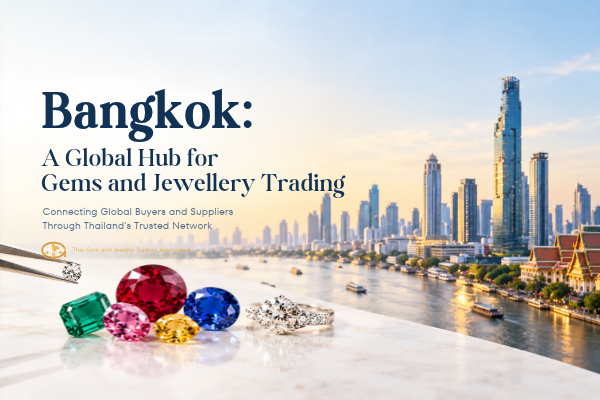
Explore Bangkok’s role in global coloured gemstone trading through Mahesak Road, Silom–Surawong, Yaowarat and Charoen Krung, where specialised business networks support Thailand’s gems and jewellery industry.
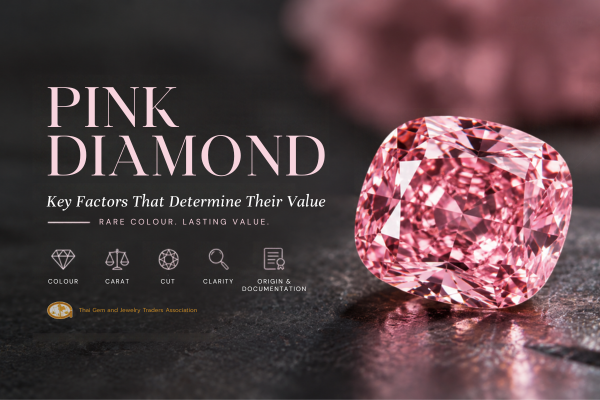
Discover how natural pink diamonds get their colour and how colour grade, carat weight, cut, clarity, provenance and laboratory reports influence their market value.