
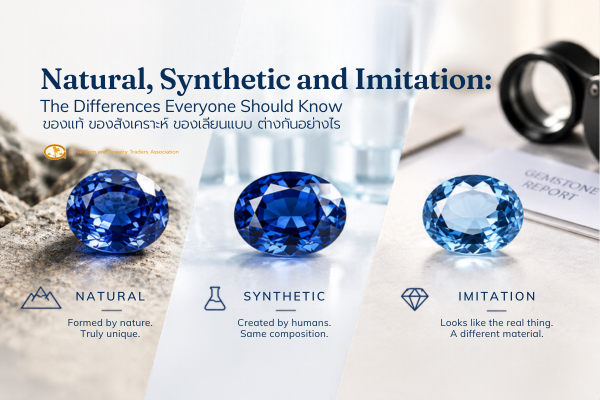
Imagine a birthday card handwritten by your mother.
Today, technology can reproduce her handwriting so precisely that every line and every variation in pen pressure looks identical to the original. To the naked eye, the two cards may be indistinguishable. If you placed them side by side, which one would you keep?
Almost everyone would choose immediately. One was genuinely written by their mother on that particular day, with the feelings she had at that moment. The other is merely a reproduction. Even if they look exactly alike, their value is not the same.
This simple answer holds the key to understanding authenticity, a concept that many people still find confusing.
Natural refers to something formed by nature. Humans may discover it, mine it or polish it, but they did not create it.
Synthetic refers to something produced by humans in a factory or laboratory to replicate the composition of a naturally occurring material. Some synthetic materials can be chemically identical to their natural counterparts.
Imitation refers to something designed to look like an authentic material but made from a different substance, such as glass fashioned to resemble a gemstone.
Many people assume that a synthetic material is closer to the real thing than an imitation. Scientifically, this may be true. But when the question is whether something is authentic, there are only two sides to consider.
Only natural materials are authentic in terms of natural origin. Synthetic materials and imitations are not natural originals.
One common argument is: “If the material is identical in every way, how can it be considered inauthentic?”
Consider a few familiar examples.
Paintings: A reproduction of a famous artwork may use the same types of paint and replicate every brushstroke. Yet no museum would present it as the original.
Wine: Wines made from the same grape variety can command vastly different prices depending on their region and vintage. This is because provenance is part of their value.
Thai amulets: Thai people understand this particularly well. No matter how closely a replica resembles an original amulet, it is not the same object that was originally consecrated and issued by a temple.
Authenticity, therefore, is not determined solely by appearance or composition. It also depends on who created something, when it was created and how it came into existence—facts that cannot be recreated simply by reproducing its physical characteristics.
Some natural materials take hundreds of millions of years to form. They provide tangible evidence of the Earth's geological history, whereas synthetic materials can be produced in a matter of weeks.
Nature does not produce materials according to customer orders. In contrast, materials that can be manufactured repeatedly may face challenges in maintaining long-term value as production expands.
Every natural specimen bears characteristics shaped by its own formation history, much like the Earth's individual fingerprints. Industrial production, on the other hand, is designed to deliver controlled and reproducible results.
Synthetic materials are not inherently wrong or inferior. They serve many valuable purposes in industrial applications, and choosing to purchase them is entirely a consumer's right.
The problem arises when sellers use appealing, modern or environmentally conscious-sounding terms while avoiding a clear disclosure that a product is not of natural origin.
In Thailand, labelling regulations govern how certain products must be described. For diamonds produced by humans, the applicable requirements call for clear identification using the term synthetic, helping prevent consumer misunderstanding.
Before purchasing any valuable item, ask the seller three straightforward questions:
Is this item natural?
Is there a report or certificate from an independent testing organisation?
Does the label or receipt clearly identify the product in accordance with applicable regulations?
An honest seller should be able to answer these questions clearly and directly.
Authenticity is about origin, not appearance.
Something that nature has taken millions of years to create cannot be recreated as the same natural original by any factory. No matter how closely a reproduction resembles it, it remains something that looks the same—not the very same thing.
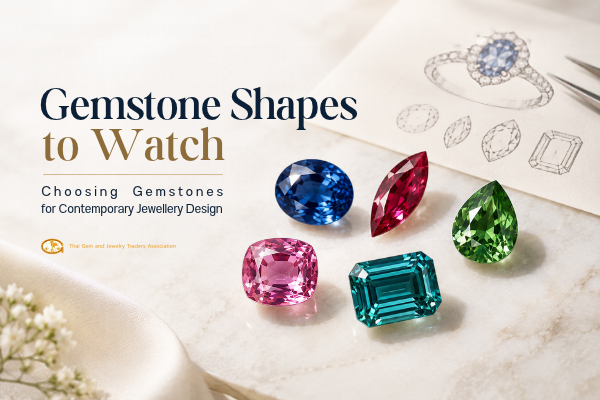
Explore Oval, Marquise, Pear and Cushion gemstone shapes, how to select them for contemporary jewellery design, and how proportions, cutting quality, rarity and market demand influence value.
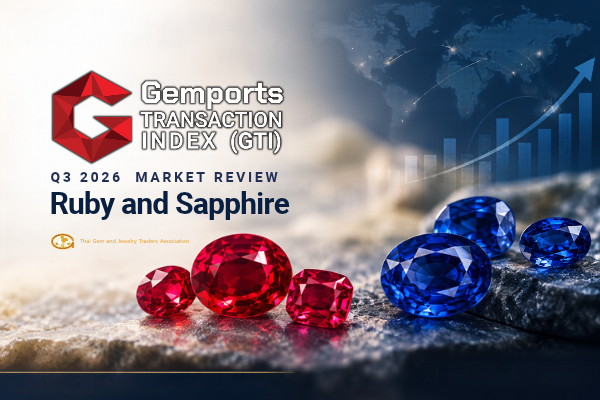
Explore GEMPORTS Q3 2026 market insights on rubies and sapphires, as GTI rises on premium gemstone transactions amid stable prices and constrained supply.
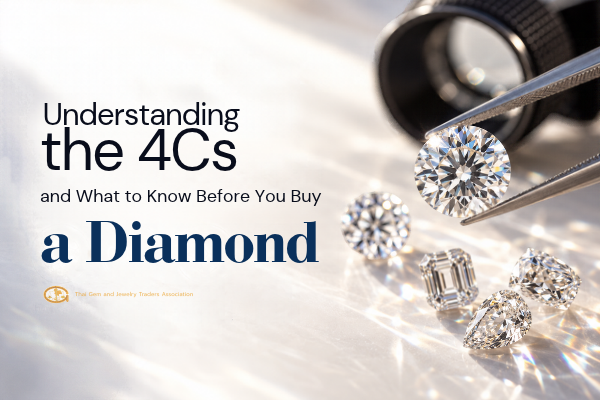
Learn how to choose a diamond with this guide to the 4Cs: Cut, Colour, Clarity and Carat Weight. Understand natural and laboratory-grown diamonds, grading reports and how to make an informed purchase.