
.png)
The Secret Behind the Beauty: Colored Gemstone Treatments You Should Know Before Buying
More than 95% of colored gemstones available in today’s market have undergone some form of quality enhancement or treatment to improve their beauty, durability, or marketability. However, not every treatment is equally accepted in the international trade.
“Enhancement” or “Treatment” refers to any process—other than traditional cutting and polishing—used to improve the appearance, durability, or saleability of a gemstone. Organizations such as American Gem Trade Association and CIBJO have established classification systems using letter codes to communicate these treatments throughout the supply chain.
| Code | Treatment Type | Description |
|---|---|---|
| N | Not Enhanced | Natural gemstone with no treatment |
| E | Routinely Enhanced | Gemstone commonly subjected to standard enhancement |
| H | Heating | Heat used to alter color, clarity, or optical effects |
| R | Irradiation | Ionizing radiation used to create or modify color |
| U | Diffusion | Chemical elements diffused into the crystal at high temperature |
| F | Filling | Glass, plastic, or borax used to fill surface-reaching fractures |
| O | Oiling / Resin | Oil or resin used to improve clarity by filling cracks |
| B | Bleaching | Chemicals used to lighten color or remove unwanted coloration |
| C | Coating | Thin film, lacquer, or foil applied to the surface |
Some heating methods are accepted and valuable, while others can dramatically reduce a gem’s value if not properly disclosed.
Heat only, with no added chemicals. This mimics natural geological processes and can improve clarity or even out color.
Status: Highest level of acceptance and considered an industry standard.
A flux material such as borax is added during heating. It melts and helps heal small fractures within the stone.
Status: Accepted, but gem labs will note residue in reports. Usually valued lower than untreated heat-only stones.
Extremely high heat combined with external elements such as beryllium to create or intensify color throughout the gemstone.
Status: Commercially accepted only with full disclosure. Significantly lower value than standard heated stones.
Low-grade fractured ruby is heated with lead glass to fill extensive cracks, dramatically improving transparency.
Status: Not accepted in the fine gem market. Must be sold as Composite Ruby, not simply “Ruby.”
Commonly used in Emerald to improve clarity.
Used to create colors in Topaz and fancy-color diamonds. Stones must be safely cooled before sale.
Stones exposed to neutron radiation without proper cool-down periods may remain hazardous. Older radium-treated diamonds are illegal and dangerous.
Terms like “Yellow Emerald” or “Green Amethyst” are considered misleading because they borrow the prestige of expensive gems to market cheaper materials.
Some irradiated stones may fade in sunlight. Failure to disclose unstable color is a serious ethical violation.
Choose reports from reputable labs such as Gemological Institute of America, Swiss Gemmological Institute, International Gemological Institute, or Gübelin Gem Lab.
If you see codes such as N (natural untreated), H (heated), Be (beryllium diffusion), or F (filled), ask for clarification immediately.
Some treated stones should never be exposed to ultrasonic cleaners or high heat.
Gemstone treatment is not inherently negative. What matters most is honest disclosure. When sellers clearly explain treatments, buyers can make informed decisions based on budget, expectations, and confidence.
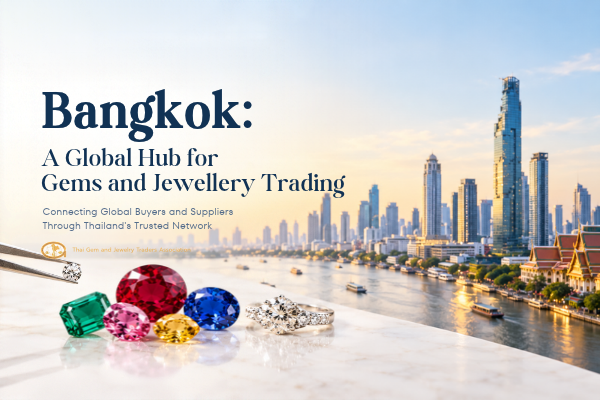
Explore Bangkok’s role in global coloured gemstone trading through Mahesak Road, Silom–Surawong, Yaowarat and Charoen Krung, where specialised business networks support Thailand’s gems and jewellery industry.
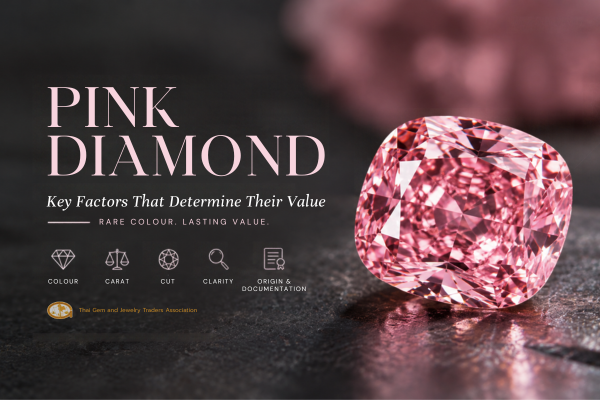
Discover how natural pink diamonds get their colour and how colour grade, carat weight, cut, clarity, provenance and laboratory reports influence their market value.
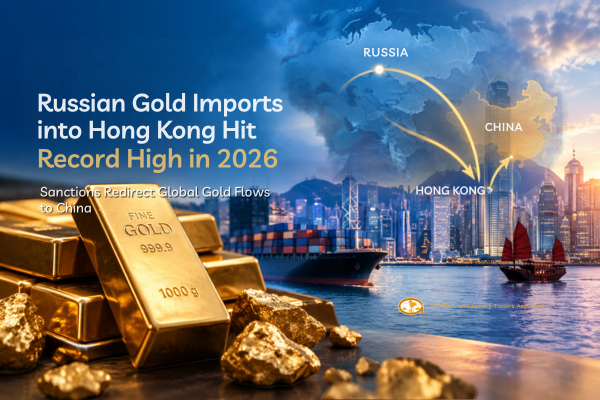
Hong Kong imported nearly 100 tonnes of Russian gold in the first seven months of 2026, highlighting shifting global trade routes, China's growing role and sanctions compliance risks.