
.png)
In the gem and jewelry industry, there are two terms that constantly cause confusion: "Carat" and "Karat" . Although they sound similar, these two words have completely distinct meanings and uses. Understanding this difference is essential for both traders and consumers to ensure transparent and internationally standardized transactions.
The Thai Gem and Jewelry Traders Association (TGJTA), as an organization committed to elevating industry standards, is dedicated to clarifying this matter by referencing data from internationally recognized gemological institutes.
"Carat" (abbreviated as ct) is the international standard unit used to measure the weight of all types of gemstones, including diamonds, rubies, sapphires, and emeralds.
The term originates from the "carob seed" of the carob tree in the Mediterranean region, which was historically used as a counterweight for weighing gemstones because the seeds were remarkably consistent in weight.
According to international standards set by the GIA (Gemological Institute of America), the definition is:
1 Carat (ct) = 200 Milligrams (mg) or 0.2 Grams (g)
Carat weight can be further divided into the unit "Point" for the precise measurement of smaller diamonds:
1 Carat (ct) = 100 Points
Therefore, when you hear "this diamond weighs 0.50 carats," it means the diamond weighs 50 points or 100 milligrams. The key takeaway is that Carat is a measure of weight, not size. Although gemstones with higher carat weight are often larger, their shape and cut also affect the visible size.
In contrast, "Karat" (abbreviated as K or kt in some regions) is the unit used to measure the purity level of gold in jewelry. It indicates the proportion of pure gold mixed into the total metal alloy.
The Karat standard is divided into 24 parts, which means:
24 Karat (24K): Represents 99.9% pure gold, which has not been mixed with other metals. Pure gold is highly ductile and soft, making it traditionally unsuitable for durable jewelry. However, newer technologies like Hard Pure Gold allow for certain types of 99.9% gold jewelry with increased hardness.
18 Karat (18K): Contains 18 parts pure gold and 6 parts other metal (18/24), equating to 75% of the total weight. This is a common standard in high-end global jewelry brands due to its strength, durability, and excellent retention of gold value.
14 Karat (14K): Contains 14 parts pure gold and 10 parts other metal (14/24), equating to 58.3%.
10 Karat (10K): Contains 10 parts pure gold and 14 parts other metal (10/24), equating to 41.7%.
The inclusion of other metals (such as silver, copper, or nickel) not only adds strength and durability to the jewelry but can also create different gold colors, such as Pink Gold or White Gold.
| Feature | Carat (ct) | Karat (K) |
| Measures | Weight | Purity |
| Used for | Gemstones (Diamonds, Colored Stones) | Gold |
| Abbreviation | ct | K or kt |
| Meaning | 1 ct = 0.2 grams | 24K = 99.9% Pure Gold |
Understanding the difference between "Carat" and "Karat" not only helps you shop for jewelry with confidence but is also a fundamental knowledge that reflects the standards and professionalism of the Thai gem and jewelry industry on the world stage.
The Thai Gem and Jewelry Traders Association sincerely hopes this article is beneficial and helps create an accurate understanding for everyone.

The World Jewellery Confederation (CIBJO) has announced the removal of the terms “Laboratory-Grown” and “Laboratory-Created” from its Blue Books
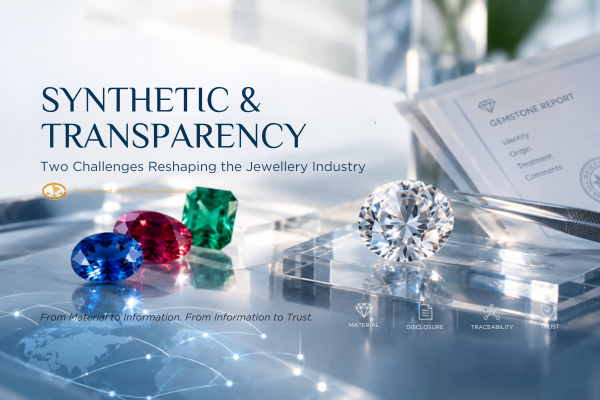
Explore how synthetic materials, disclosure, provenance and traceability are reshaping transparency and consumer trust in the global jewellery industry.
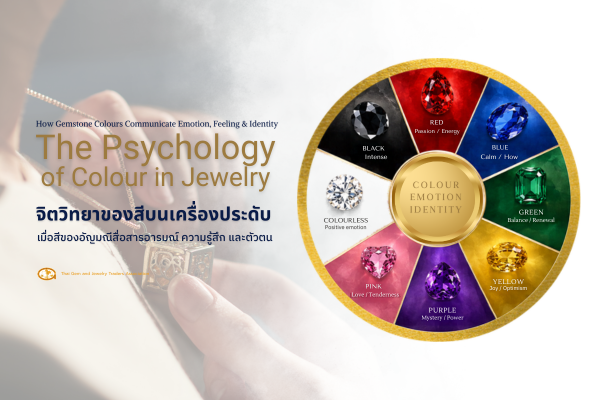
Discover how gemstone colours influence perception and communicate emotion in jewellery. Explore red, blue, green, yellow, purple, pink, white and black gemstones, plus hue, tone and saturation.