
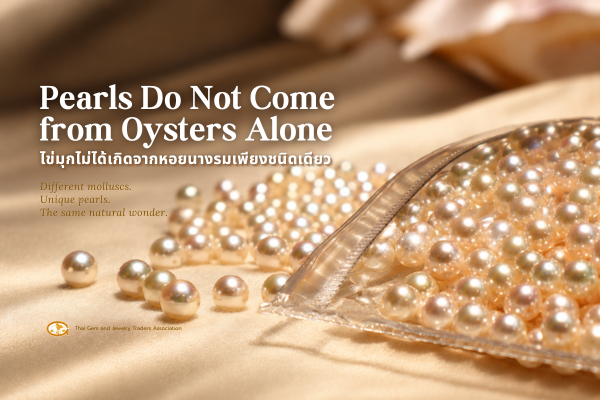
Exploring the Diversity of Pearl-Producing Molluscs and the Gemmological Value of Pearls
When people think of pearls, they often picture lustrous white gems formed inside oysters. However, pearls are not exclusive to oysters. They can develop in a variety of molluscs, including marine and freshwater bivalves, as well as certain marine gastropods.
Different mollusc species produce pearls with distinctive colours, shapes, surface characteristics and internal structures. Some are known for their iridescent nacre, while others display a porcelain-like lustre or distinctive patterns resembling flames.
From the classic white Akoya and golden South Sea pearls to pink Conch Pearls, orange Melo Pearls and colourful Abalone Pearls, this diversity makes pearls one of the most fascinating organic gem materials in the jewellery industry.
Beyond their beauty, pearls offer an interesting connection between biology, mineralogy, gemmology and jewellery craftsmanship.
Pearls are biomineralised materials produced by molluscs, a large group of invertebrate animals with soft bodies, many of which have protective shells. These include bivalves, such as oysters and mussels, and gastropods, such as sea snails.
Within a mollusc, a specialised tissue called the mantle produces materials that form the shell. Under certain biological conditions, epithelial cells can develop into a pearl sac, which secretes successive layers of material that gradually form a pearl.
Natural Pearls develop spontaneously in molluscs without deliberate human intervention. In contrast, Cultured Pearls are produced through human-assisted cultivation, in which a nucleus, mantle tissue graft or other suitable biological material is introduced to initiate pearl formation.
It is worth noting that pearls do not always form when a grain of sand enters an oyster, as is commonly believed. The actual formation process is more complex and involves the development and activity of pearl-forming tissue.
Pearls can form in both marine and freshwater environments, and their structures can be broadly classified as nacreous or non-nacreous.
Different mollusc species have distinct biological characteristics and biomineralisation processes. As a result, the pearls they produce vary in colour, shape, lustre and internal structure.
Pearl oysters are among the most commercially important sources of pearls. They belong to the family Pteriidae, which includes several species used in pearl cultivation.
Some of the best-known examples include:
Akoya Pearls: Associated with Pinctada fucata and related taxa, these pearls are particularly well known for their round shapes and refined lustre. Japan and China are major centres of Akoya pearl production.
South Sea Pearls: Produced by Pinctada maxima, these pearls are cultivated in regions including Australia, Indonesia and the Philippines. They are recognised for their white, silver and golden colours.
Tahitian Pearls: Produced by Pinctada margaritifera, these pearls are particularly known for their naturally dark body colours, ranging from grey and black to green and other colourful overtones.
These are nacreous pearls, valued for their characteristic lustre and iridescence, and they play an important role in the international pearl jewellery market.
Many freshwater pearls are produced by bivalves belonging to the family Unionidae, which inhabit rivers, lakes and other freshwater environments. Genera such as Hyriopsis and Cristaria include species associated with freshwater pearl cultivation.
China is an important centre of freshwater cultured pearl production.
Freshwater pearls are available in a wide variety of shapes and colours, including white, pink, purple, peach and pastel shades. Their shapes range from round and oval to drop-shaped and baroque forms, which are asymmetrical and irregular in appearance.
Their versatility makes them particularly popular in contemporary jewellery design.
The Queen Conch, scientifically known as Aliger gigas (formerly Strombus gigas), is a marine gastropod found in the Caribbean Sea.
The pearls it produces are known as Conch Pearls. They are recognised for their distinctive pink, orange, white and brownish colours. Some display a characteristic flame-like pattern known as Flame Structure, which is particularly interesting from a gemmological perspective.
Conch Pearls are classified as non-nacreous pearls because they do not possess the layered nacre structure found in conventional nacreous pearls. Instead, they often display a porcelain-like lustre.
Their rarity and distinctive appearance have made them sought after by collectors and the fine jewellery market.
Melo melo is a large marine gastropod found in the Indo-Pacific region, including waters around Southeast Asia.
Its pearls, known as Melo Pearls, range in colour from yellow and orange to golden, cream and brown. Some exhibit flame-like patterns across their surfaces, creating a distinctive visual effect.
Like Conch Pearls, Melo Pearls are non-nacreous. Their surface appearance is generally smooth and porcelain-like rather than showing the iridescence associated with nacreous pearls.
Melo Pearls are particularly interesting to collectors because of their relative rarity and natural colour. However, their value should be assessed based on verified identity, quality and market demand rather than colour alone.
Abalone belongs to the genus Haliotis. These marine gastropods are well known for their shells, whose inner surfaces display striking iridescent colours, including green, blue, purple and pink.
Abalone can also produce pearls, known as Abalone Pearls. These are appreciated for their distinctive colours and unusual surface characteristics.
Abalone Pearls are often irregular or asymmetrical in shape, reflecting the biological conditions under which they develop. Their unique appearance makes them interesting materials for distinctive jewellery designs.
In addition to producing pearls, abalone shells are an important source of Mother-of-Pearl, widely used in jewellery and decorative applications.
Scallops belong to the family Pectinidae and are marine bivalves found in oceans around the world.
Although they are not a major commercial source of pearls, some scallop species can produce pearl-like formations with distinctive internal and surface structures.
Gemmological studies have documented pearls from scallops with non-nacreous characteristics, which may reveal distinctive patterns under microscopic examination.
They provide another example of the diversity of pearl-forming molluscs and the different biomineralisation structures found in nature.
From a gemmological perspective, pearls are classified as organic gems because they are formed through biological processes rather than geological processes within the Earth's crust.
In nacreous pearls, the principal components include:
Calcium Carbonate (CaCO₃): The main mineral component of pearls.
Aragonite: A crystalline form of calcium carbonate that forms the principal mineral component of nacre.
Conchiolin: An organic protein-based material that forms part of the structure and helps bind the mineral layers together.
In nacreous pearls, microscopic aragonite platelets are arranged in successive layers with organic material between them. This structure interacts with light through reflection and interference, producing the characteristic iridescence often associated with pearls.
The general gemmological properties of pearls include:
|
Property |
General characteristics |
|---|---|
|
Chemical composition |
Mainly calcium carbonate (CaCO₃) |
|
Mohs hardness |
Approximately 2.5–3.0 |
|
Refractive index |
Approximately 1.52–1.69 |
|
Specific gravity |
Approximately 2.60–2.85 |
|
Colour |
White, cream, black, grey, yellow, orange, pink, purple, green and other shades |
These are general reference ranges for pearls. Actual values may vary according to pearl type and structure.
Nacreous vs Non-nacreous Pearls
Pearls can be broadly classified into two groups according to their structural characteristics.
1. Nacreous Pearls
Nacreous pearls contain layers of nacre, composed primarily of calcium carbonate crystals and organic material. Their layered structure produces characteristic lustre and iridescence.
Examples include Akoya, South Sea, Tahitian and most freshwater pearls.
2. Non-nacreous Pearls
Non-nacreous pearls do not possess the same layered nacre structure. Instead, they may display a porcelain-like lustre and distinctive surface patterns, including flame-like structures.
Examples include Conch Pearls and Melo Pearls, as well as pearls produced by certain other molluscs.
This distinction is important in gemmological identification and quality assessment because the two groups have different structural characteristics and should not necessarily be evaluated using identical criteria.
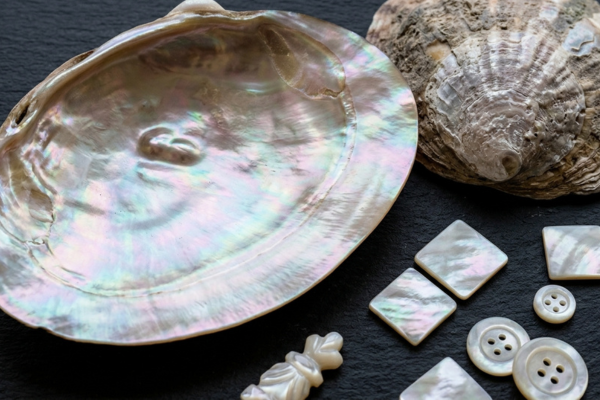
Another important term in the jewellery industry is Mother-of-Pearl, which refers to the iridescent nacreous material lining the inner surface of certain mollusc shells.
Although Mother-of-Pearl and pearls share similar structural components, they are not the same material in terms of their formation and physical location.
Mother-of-Pearl forms as a protective inner layer of a mollusc's shell. It consists primarily of calcium carbonate crystals and organic material, arranged in layers that produce its characteristic iridescence.
A pearl, on the other hand, forms within the mollusc through the activity of specialised pearl-forming tissue.
Mother-of-Pearl from pearl oysters and abalone is particularly valued in jewellery making and decorative craftsmanship because of its natural iridescent appearance.
Common applications include:
Watch dials: Mother-of-Pearl is widely used for watch faces because of its distinctive natural colours and reflections.
Jewellery: Used in pendants, earrings and decorative jewellery components.
Buttons and accessories: Its attractive surface makes it suitable for fashion accessories.
Inlay work: Used in decorative patterns on jewellery, ornaments and other crafted objects.
Decorative objects: Incorporated into jewellery boxes, furniture details and traditional handicrafts.
Another related term is Blister Pearl, which refers to a pearl that develops attached to the inner surface of a mollusc's shell. Unlike a free pearl, it remains connected to the shell during its formation.
It is also important to distinguish a true blister pearl from a shell blister, which is simply an abnormal or localised thickening of the shell and is not necessarily a pearl.
Understanding these distinctions helps jewellers, traders and consumers identify different pearl-related materials accurately.
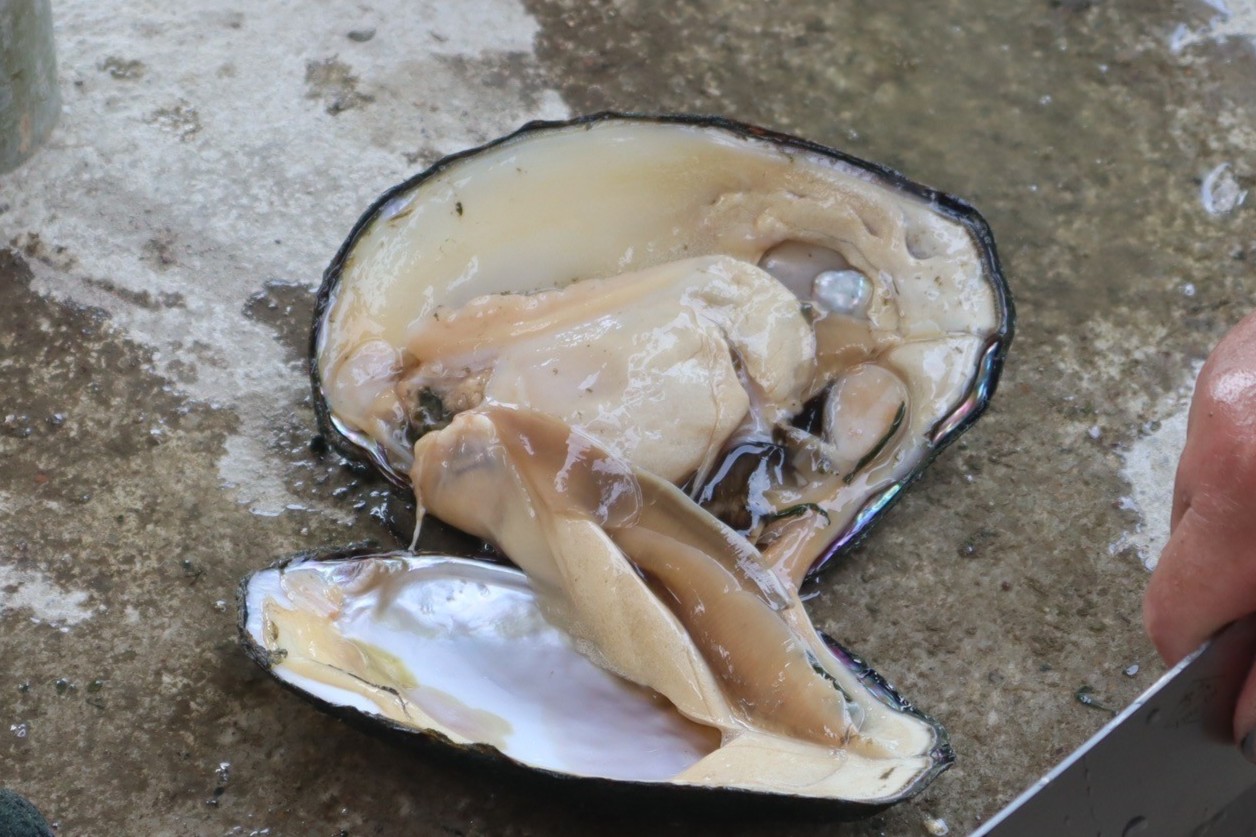
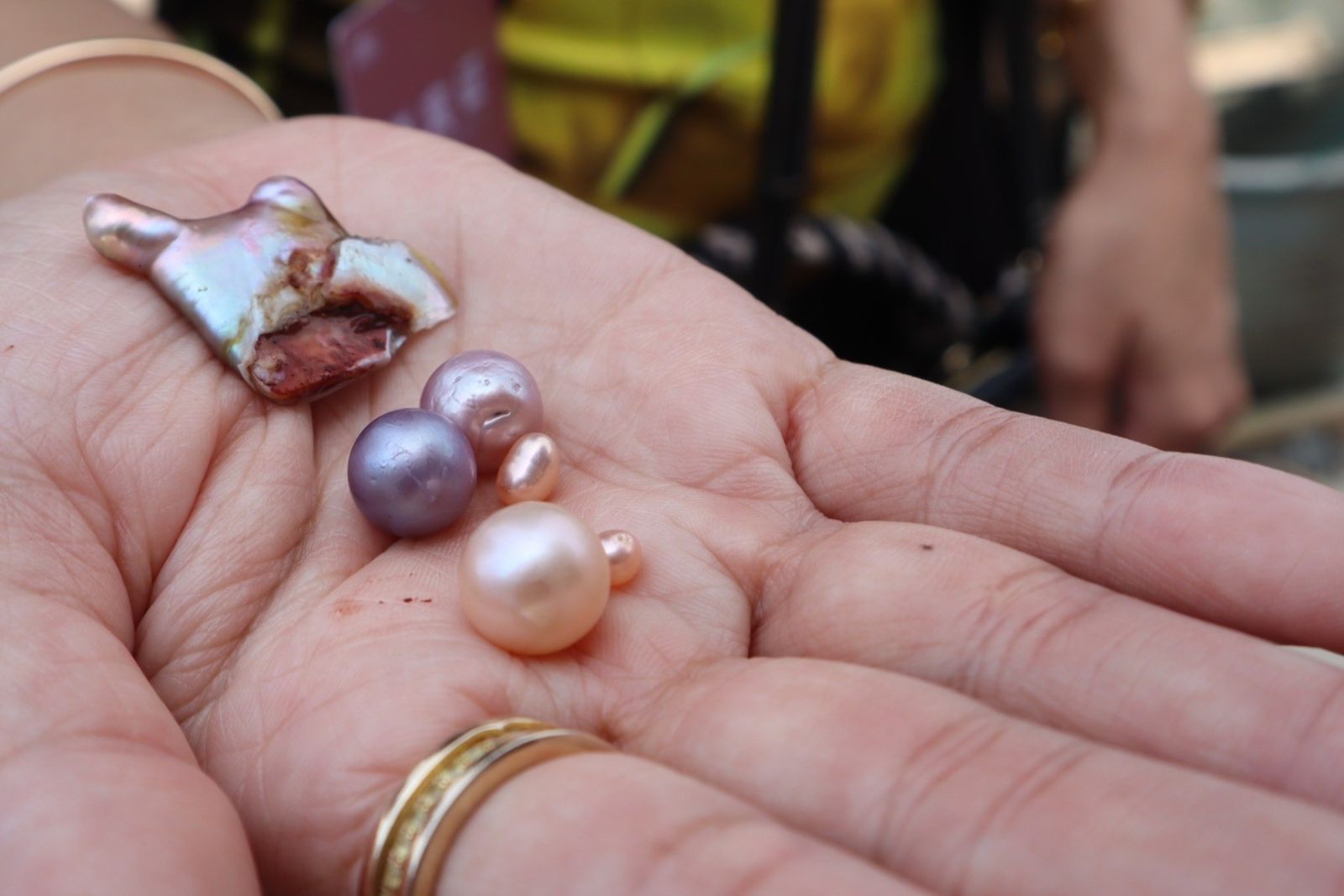
The colour and appearance of pearls are influenced by several factors, including the mollusc species, internal structure and environmental conditions during growth.
1. Nacre Structure
The thickness, arrangement and consistency of aragonite platelets influence how light interacts with the pearl's surface. These structural characteristics contribute to its lustre and iridescence.
2. Mollusc Species
Different mollusc species produce pearls with distinctive characteristics. For example, South Sea Pearls are known for their white, silver and golden colours, while Tahitian Pearls are recognised for their naturally dark body colours and varied overtones.
3. Environmental Conditions
Water temperature, water quality, food availability and the surrounding environment can influence mollusc health and pearl formation. These factors may affect the development and characteristics of the resulting pearls.
4. Pearl Structure
Nacreous pearls, such as Akoya and South Sea Pearls, display lustre associated with their layered nacre structure. Non-nacreous pearls, such as Conch and Melo Pearls, have different internal structures and may exhibit distinctive surface patterns, including Flame Structure.
These differences explain why pearls from different molluscs can have such a wide range of colours, surface appearances and optical effects.
Although pearls can be examined through their visible characteristics, such as colour, shape and lustre, determining whether a pearl is natural or cultured requires specialised gemmological examination.
Gemmological laboratories use various analytical techniques to identify pearls, study their internal structures and investigate possible treatments.
Common techniques include:
Microscopy: Examines surface characteristics, internal structures and microscopic details.
X-ray Radiography: Provides images of internal structures and helps distinguish natural pearls from certain types of cultured pearls, including those with or without a nucleus.
X-ray Fluorescence (XRF): Analyses the elemental composition of a material and can provide supporting information for pearl identification.
UV-Visible Fluorescence Spectroscopy: Examines optical responses that may help identify certain colour treatments and other characteristics.
Raman Spectroscopy and UV-Vis-NIR Spectroscopy: Analytical techniques used to study mineral composition, optical properties and certain treatments.
LA-ICP-MS: A highly sensitive analytical technique used to measure trace elements, providing additional information that can support studies of pearl characteristics and possible provenance.
No single technique can answer every question about a pearl. Laboratories select and combine appropriate methods according to the pearl type and the purpose of the examination.
Gemological testing is also important for identifying treatments that may alter a pearl's appearance, including dyeing, bleaching, irradiation and surface coating.
For traders and consumers, reliable laboratory identification can provide important information about a pearl's identity, characteristics and treatment status.
Pearl quality assessment differs from the evaluation of diamonds and coloured gemstones. The Gemological Institute of America (GIA) uses the GIA 7 Pearl Value Factors, which provide a framework for understanding the characteristics that influence pearl quality.
The seven factors are:
Size: Refers to the diameter or dimensions of a pearl. Larger pearls of comparable quality and type are generally less common.
Shape: Pearls occur in various forms, including round, near-round, drop, button and baroque shapes. Their desirability depends on pearl type and intended use.
Colour: Includes the body colour and overtone, as well as colour consistency and visual appeal.
Lustre: Describes the intensity and sharpness of light reflected from the pearl's surface.
Surface: Considers surface characteristics such as blemishes, spots, irregularities and other visible imperfections.
Nacre: Refers to the quality and, where applicable, thickness of the nacre layers. This factor is particularly relevant when evaluating certain types of beaded cultured pearls.
Matching: Assesses how well multiple pearls complement one another in terms of colour, size, shape and lustre, particularly in necklaces, earrings and matching jewellery sets.
These factors provide a systematic framework for understanding pearl quality. However, they must be applied with consideration for the specific type of pearl being evaluated.
For example, nacre thickness is relevant to nacreous pearls but cannot be assessed in the same way for non-nacreous pearls.
Beyond physical quality, market value is also influenced by rarity, consumer demand, origin information, availability and the reliability of identification documentation.
Pearls have a relatively low hardness of approximately 2.5–3 on the Mohs scale. This makes them more susceptible to scratches and damage than many other gemstones.
Proper care is therefore essential to preserve their appearance and longevity.
Recommended care practices include:
Avoid direct contact with perfume, hairspray, cosmetics and household chemicals.
Wipe pearls gently with a soft, clean cloth after wearing to remove perspiration and surface residue.
Avoid ultrasonic cleaners, which may damage pearl surfaces.
Store pearls separately from harder gemstones, particularly diamonds, to prevent scratches.
Protect pearls from excessive heat and prolonged exposure to unsuitable environmental conditions.
Avoid harsh cleaning agents and abrasive materials.
With appropriate care, pearls can retain their natural lustre and beauty for generations.
Pearls are among the most remarkable organic gem materials, reflecting the close relationship between living organisms and the natural world.
Differences in mollusc species, biological processes and environmental conditions contribute to the wide range of pearl characteristics found in nature.
From the luminous white and golden hues of Akoya and South Sea Pearls to the distinctive pink of Conch Pearls, the orange tones of Melo Pearls and the colourful iridescence of Abalone Pearls, each type represents a different expression of nature's biomineralisation processes.
Beyond pearls themselves, Mother-of-Pearl also plays an important role in jewellery manufacturing and design, appearing in watch dials, pendants, earrings, decorative components and intricate inlay work.
Understanding that pearls do not come from oysters alone offers more than an introduction to different pearl varieties. It provides a broader appreciation of the relationship between biology, gemmology and the jewellery industry.
Nature creates materials with remarkable differences in colour, structure and optical properties. Each pearl type has its own identity and characteristics, making pearls a fascinating subject for jewellery professionals, designers, collectors and consumers around the world.
The following authoritative sources are recommended for further information and technical reference:
1. GIA – Gem Encyclopedia: Pearl
General information on pearl characteristics, chemical composition, physical properties and varieties.
2. GIA – How GIA Analyses Pearls from Start to Finish (2025)
An overview of pearl identification and laboratory examination techniques.
3. GIA – The 7 Pearl Value Factors
An explanation of the seven factors used to evaluate pearl quality.
4. CIBJO – Guide for Classifying Natural Pearls and Cultured Pearls
Guidance on the classification of natural and cultured pearls.
CIBJO: Pearl Classification Guide
5. GIA – Gems & Gemology, Winter 2024
Gemmological research and laboratory analysis of different gemstone materials, including pearls.

Learn how to estimate gold value using purity, weight and daily buying prices. Explore simple formulas and examples to help you assess your gold before selling.
Learn about Thailand’s PP.01.5 VAT exemption, eligible gemstones and precious metals, association membership requirements, supporting documents, and application procedures for gem and jewellery businesses.
Learn what gemstone laboratory reports reveal about gemstone identity, treatments, and geographic origin—and what they cannot tell you about quality, market value, and provenance.