The gem and jewellery industry is built on beauty, quality, rarity and value. However, unlike many other consumer products, gemstones and jewellery have characteristics that are not always visible to the naked eye. Their value and identity may depend on their natural properties, treatments, manufacturing processes, material composition and origin.
Two gemstones may look almost identical but differ significantly in their nature and characteristics. Some occur naturally, some have undergone treatments to improve their appearance, some are laboratory-grown, while others are imitation materials designed to resemble natural gemstones. Similarly, jewellery pieces that look alike may contain different precious metals, varying levels of metal purity or different combinations of materials.
These differences make accurate product disclosure particularly important. Jewellery businesses have a responsibility to provide clear, truthful and sufficient information so that consumers understand what they are purchasing, including the product's actual characteristics, limitations and relevant conditions.
Selling a product without disclosing material facts, or using descriptions that create a misleading impression, can undermine consumer rights, damage business credibility and affect the reputation of the entire industry.
Honest product disclosure should cover the characteristics that may influence a consumer's purchasing decision. Key areas include the following:
Businesses should clearly identify whether a gemstone is natural, synthetic or an imitation (simulant), as these categories differ in their composition, structure, formation and characteristics.
Using a gemstone name without clearly identifying its nature, or adopting trade descriptions that lead consumers to believe a material is natural when it is not, can create a misleading impression about the product.
Some natural gemstones undergo treatments to improve or alter their appearance. Common examples include heat treatment, fracture filling and irradiation.
The presence of a treatment does not automatically mean that a gemstone is of poor quality or unsuitable for sale. However, treatment information is important because it may affect the gemstone's value, durability, care requirements and suitability for certain applications.
Businesses should disclose whether a gemstone has been treated and provide details of the treatment to the extent that reliable information is available.
Geographic origin can be an important factor in the valuation of certain gemstones, particularly rubies, sapphires and emeralds.
When a gemstone is described as originating from a particular country or mining locality, the claim should be supported by appropriate evidence. Businesses should not speculate about geographic origin or use the reputation of a well-known source to increase a product's perceived value without sufficient supporting information.
It is also important to distinguish between origin, which refers to geographic origin, and provenance, which refers to the history or documented background and chain of custody of a gemstone.
For jewellery made of gold, silver or platinum-group metals, businesses should accurately disclose the type of metal and its fineness or precious metal content.
For example, 18-karat and 14-karat gold contain different proportions of gold. Clear disclosure enables consumers to understand the product's composition and make informed comparisons.
Some gemstone products consist of multiple assembled components, such as doublets and triplets. Others use materials designed to imitate the appearance of natural gemstones.
Businesses should disclose these characteristics clearly. Products should not be presented as solid, single-piece natural gemstones when they are actually assembled materials or imitations.
Transparent disclosure does not diminish a product's value. Instead, it allows consumers to understand its true characteristics and choose products that suit their preferences and budgets.
Although legal requirements differ between countries, a common principle underpins consumer protection frameworks worldwide: businesses should not provide false information, create misleading impressions or conceal material facts that could influence purchasing decisions.
In the United States, the Federal Trade Commission (FTC) provides guidance on truthful marketing and advertising through its Guides for the Jewelry Industry, commonly known as the FTC Jewelry Guides.
These guides address the marketing of jewellery, precious metals, gemstones and pearls. They establish principles for accurately representing products, including:
Gemstone identity and product type
Grade and quality
Quantity, size and weight
Colour and cut
Precious metal composition
Gemstone treatments
Durability and product characteristics
Geographic origin, price and value claims
The FTC also emphasises the appropriate use of terminology for natural gemstones, synthetic materials and imitations to help prevent consumer misunderstanding.
The Jewelry Guides are regulatory guidance used by the FTC in interpreting and enforcing applicable consumer protection and advertising laws. They are not a standalone statute replacing other applicable laws.
Reference:
The European Union addresses misleading commercial practices through the Unfair Commercial Practices Directive 2005/29/EC, an important legal framework for protecting consumers against deceptive marketing and sales practices.
Article 6 addresses misleading actions, including false information or presentations that may mislead consumers about:
The nature and type of a product
Its composition and essential characteristics
Manufacturing methods and geographic origin
Quality and testing results
Price and specific product advantages
Article 7 addresses misleading omissions. Withholding material information that consumers need to make informed decisions, or presenting such information in an unclear, ambiguous or inappropriate manner, may constitute a misleading commercial practice.
This principle demonstrates that truthful business communication involves more than simply avoiding false statements. It also requires businesses to disclose material facts that consumers need to know.
The Directive establishes a European Union framework that Member States implement through their respective national laws.
Reference:
Beyond national legislation, the jewellery industry has developed international standards promoting ethical and responsible business practices throughout the supply chain.
The Responsible Jewellery Council (RJC) is an international organisation that promotes responsible business practices in the jewellery and watch supply chain.
Its Code of Practices (COP) 2024 addresses product integrity and disclosure, including the prevention of misleading product representations.
Key disclosure areas include:
Gemstone treatments: Businesses are required to disclose relevant treatments and provide information about their nature, including whether they are permanent or non-permanent.
Laboratory-grown materials: The nature of laboratory-grown materials must be clearly disclosed, with appropriate prominence in relation to the gemstone name.
Assembled gemstones: Products consisting of multiple components, such as doublets and triplets, should be identified accordingly.
Imitation materials: Imitations should be identified as such, with the actual material disclosed where required, such as glass or plastic.
Geographic origin: Claims concerning the geographic origin of coloured gemstones should be supported by appropriate information and relate to actual gemstone-producing sources.
These requirements reflect an important principle: information that materially affects a consumer's understanding of a product must be disclosed appropriately and should not be concealed in small print or communicated in an unclear manner.
The RJC Code of Practices is a voluntary industry standard applicable to organisations participating in the RJC system and subject to its certification requirements. It is not legislation that automatically applies to every jewellery business worldwide.
References:
Another important organisation is CIBJO, the World Jewellery Confederation, which develops the CIBJO Blue Books as international industry references for terminology, classification and product descriptions.
The Blue Books cover several key areas of the jewellery industry, including:
Diamond Book – Diamonds
Gemstone Book – Coloured gemstones
Pearl Book – Pearls
Precious Metals Book – Precious metals
Gemmological Laboratories Book – Gemmological laboratories
Coral Book – Coral
Responsible Sourcing Book – Responsible sourcing
CIBJO emphasises the consistent and accurate use of terminology to ensure that manufacturers, traders, retailers, consumers and other industry participants share a common understanding of product characteristics.
Although the CIBJO Blue Books are voluntary industry standards rather than directly enforceable legislation, they are widely used as professional references and are recommended for application throughout the jewellery supply chain.
Reference:
In Thailand, several laws govern product information, advertising and fair commercial practices. One of the most relevant is the Consumer Protection Act B.E. 2522 (1979), which establishes consumer rights and responsibilities for business operators.
Section 4 establishes five fundamental consumer rights. One of these is:
The right to receive correct and sufficient information and descriptions of the quality of goods or services to enable consumers to make informed purchasing decisions.
This principle is particularly relevant to the gem and jewellery trade, where consumers may not have the specialist knowledge required to independently identify or assess the characteristics of a gemstone or precious metal.
Section 22 prohibits advertising that is unfair to consumers or may adversely affect society as a whole. This includes statements concerning the origin, condition, quality or essential characteristics of goods and services.
Examples of prohibited advertising include:
False or exaggerated statements.
Statements that may create a misleading impression about essential product characteristics, including claims supported by academic references, statistics or other information when such supporting information is itself false or exaggerated.
Applied to the gem and jewellery industry, advertising a gemstone as natural, claiming a specific geographic origin or representing a product as meeting a particular quality level without adequate supporting information may constitute misleading advertising.
Section 47 addresses liability where a person intentionally causes consumers to misunderstand the origin, condition, quality, quantity or other essential characteristics of goods, whether their own products or those of others, through advertising or labels containing false statements or statements that the person knows or should know may cause misunderstanding.
Such conduct may carry criminal penalties under the Act, with additional penalties in certain cases involving repeat offences.
This provision demonstrates that inaccurate product representations are not merely ethical or reputational concerns. Depending on the facts and the legal elements of the offence, they may also result in legal liability.
Not every inaccurate statement automatically constitutes an offence under Section 47. The relevant legal elements and circumstances must be assessed in each case.
Transparency also extends to pricing and the presentation of product details.
Thailand's Price of Goods and Services Act B.E. 2542 (1999) provides a legal framework for price regulation and the prevention of unfair commercial practices. The Department of Internal Trade issues relevant notifications concerning price display and product information, including requirements applicable to electronic commerce.
For gem and jewellery businesses, providing clear information about prices, weight, quantity and relevant product details helps consumers make informed comparisons and purchasing decisions.
The specific notifications and requirements applicable to each product category and sales channel should also be checked.
References:
Based on the laws and international industry standards discussed above, the following practical guidelines can help businesses establish transparent and responsible trading practices.
1. Provide Accurate Product Information
Clearly identify the type, nature, characteristics and composition of every product. Avoid names or descriptions that may mislead consumers about the natural or synthetic nature of gemstones or the composition of precious metals.
2. Disclose Gemstone Treatments
Inform customers when gemstones have undergone treatments. Where information is available, explain the treatment process and provide relevant care and maintenance recommendations.
3. Support Geographic Origin Claims with Evidence
Claims about a gemstone's country or locality of origin should be supported by appropriate evidence. When the origin cannot be confirmed, businesses should communicate this limitation rather than speculate or make unsupported claims.
4. Use Gemmological Laboratory Reports Responsibly
When a gemstone is accompanied by a laboratory report, present the information accurately and within the scope of the report.
Businesses should not imply that a laboratory report guarantees a gemstone's market value or selling price unless the report specifically provides such information.
5. Maintain Consistent Disclosure Across All Sales Channels
Whether selling through physical stores, websites, online marketplaces or social media, product descriptions should remain accurate and consistent. Material information should not be disclosed only when customers specifically ask for it.
6. Improve Staff Knowledge and Professional Competence
Sales personnel should have sufficient knowledge of gemstones, treatments, precious metals and industry terminology to explain products accurately. When uncertain, they should consult qualified specialists or gemmological laboratories before providing information to customers.
7. Take Responsibility for Information Provided After the Sale
Businesses should provide receipts, product descriptions or supporting documents that record important product details. They should also communicate appropriate care instructions, repair services and warranty conditions as agreed with customers.
Providing accurate product information may require additional time, staff training, product verification and documentation. However, these efforts represent an investment in long-term business credibility.
When consumers receive accurate information, they can select products according to their preferences and budgets, understand the differences between gemstone categories and assess whether a product meets their expectations.
At the same time, businesses that operate transparently can build lasting customer relationships, reduce disputes arising from misunderstandings and distinguish themselves through professional standards rather than competing solely on price.
At the industry level, consistent product disclosure helps strengthen confidence among international trading partners, improve the credibility of products and support Thailand's position as a recognised global centre for the gem and jewellery trade.
Ethical business practices should not be measured solely by the volume of products sold, but also by a business's responsibility to tell customers the truth about what they are buying.
Every gemstone and jewellery product has its own value, determined by its natural characteristics, manufacturing processes, quality and market demand. Regardless of the product category, every consumer deserves accurate information and the opportunity to make purchasing decisions based on facts.
Trust is the foundation of trade, and honesty is the standard that enables the gem and jewellery industry to grow sustainably.
Legal note: This article is intended for educational purposes and is based on the legal and industry references identified above. The applicability and enforcement of legislation depend on the relevant jurisdiction and the facts of each case. Businesses should consult the latest applicable legislation and seek qualified legal advice where necessary.
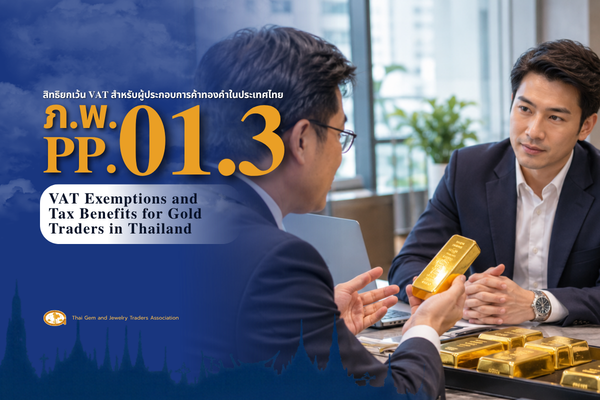
Learn about Thailand's PP.01.3 and PP.01.5 forms, VAT exemptions for gold, precious metals and gemstones, eligibility requirements, supporting documents and tax benefits available to TGJTA members.
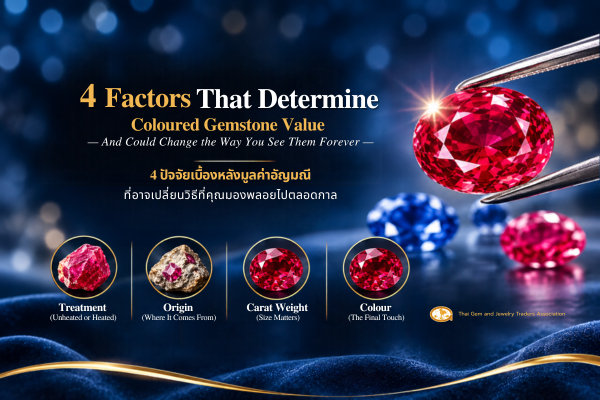
Discover the 4 key factors influencing ruby and sapphire values: treatment, origin, carat weight and colour, with Q3 2026 Gemports reference prices.

รู้จักองค์กรสำคัญในอุตสาหกรรมเพชรโลก ตั้งแต่ Kimberley Process, CIBJO, WFDB, WDC, GIA ไปจนถึงสมาคมการค้าและหน่วยงานกำกับดูแล ที่มีบทบาทต่อมาตรฐาน ความโปร่งใส และความเชื่อมั่นในตลาดเพชร